 Skip to content


Learning how to replace garage door cable parts starts with understanding how much tension is involved in the garage door system. Cables work with springs, drums, and other lifting parts to raise and lower a heavy garage door. A frayed, loose, rusted, or broken cable can make the door crooked, jammed, or unsafe.
Some garage door maintenance is homeowner-friendly, but cable replacement is different. Garage door cables connect to parts that can remain under strong spring tension. Supreme Garage Door Repair recommends leaving cable replacement, drum adjustments, spring tension, and bottom-bracket work to a trained technician.
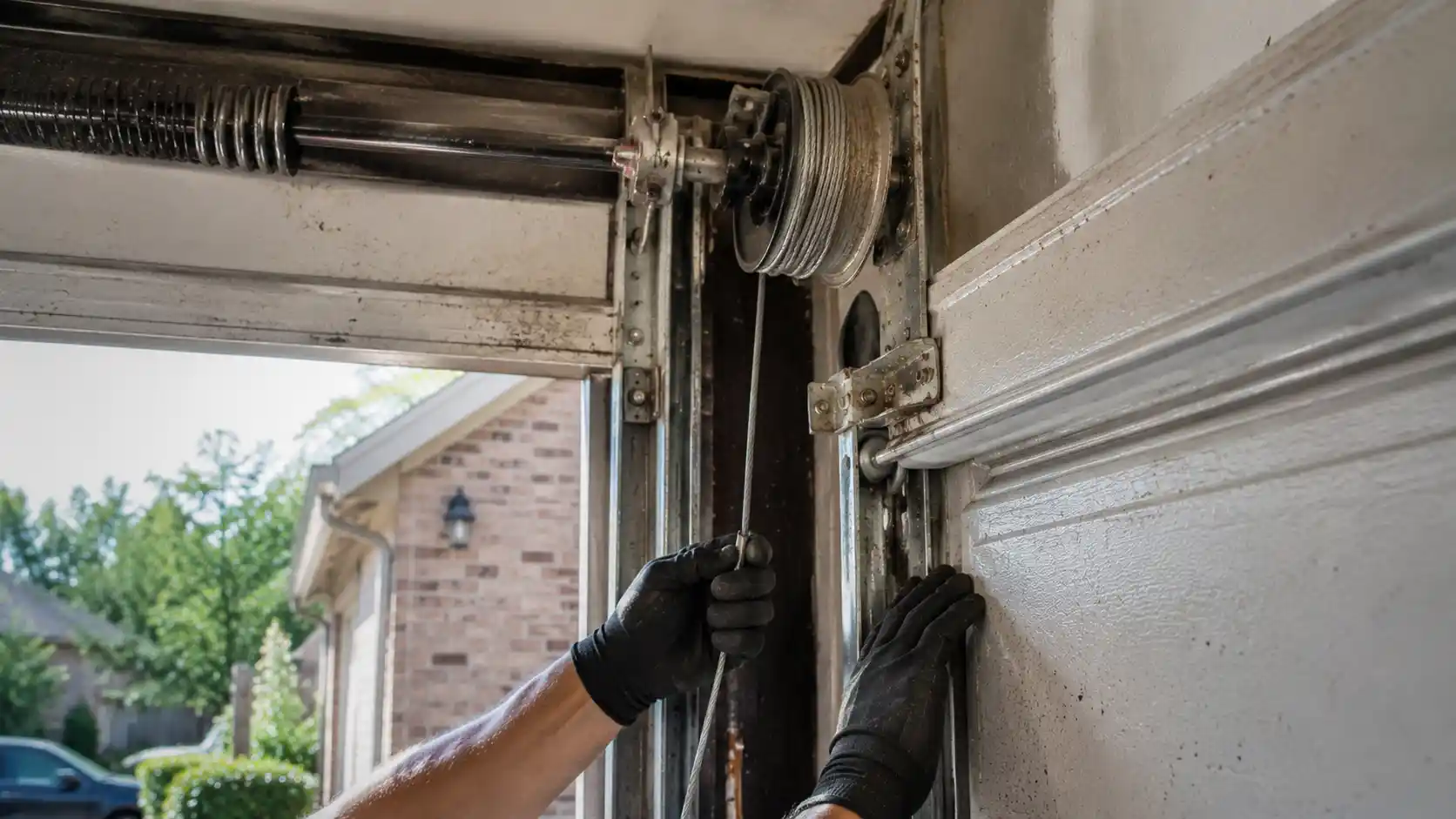
Garage door cables help transfer the lifting force created by the springs to the garage door.
On a torsion-spring system, lift cables normally run from the bottom of the door to cable drums near the torsion shaft. As the door moves, the cables wind and unwind around the drums.
Extension-spring systems use cables and pulleys in a different arrangement, but the purpose is similar: helping support and control the weight of the door.
Because cables are part of the lifting system, even a small problem can affect door balance and movement. Supreme's garage door repair team checks cables along with springs, drums, tracks, rollers, brackets, and other parts that may contribute to the problem.
You do not need to remove anything to check for common warning signs. A visual inspection from a safe distance can reveal many cable problems.
If you notice one of these signs, stop repeatedly operating the door. Continuing to use a damaged cable can place extra strain on the opposite cable, springs, opener, tracks, and panels.
Supreme provides professional garage door cable replacement for worn, loose, frayed, stretched, and broken cables throughout North Texas.
If you are researching how to replace garage door cable parts yourself, the most important point is that this repair involves more than removing an old wire and installing a new one.
The cable is part of a counterbalance system that may still contain stored spring energy. Cable drums, bottom brackets, torsion springs, extension springs, and related hardware can move suddenly when tension changes.
Safety warning: Do not cut a damaged cable, remove a bottom cable bracket, loosen cable drums, adjust torsion springs, release spring tension, rewind cables onto drums, or force a crooked garage door open or closed.
Instead, stop using the door and keep the area clear until the system can be inspected.

Understanding how to replace garage door cable systems does not require performing high-tension work yourself. It can still help to know what a technician checks during service.
A technician first determines why the cable failed. The cable itself may be worn, but spring issues, drum problems, misalignment, damaged brackets, worn bearings, or poor door balance can also contribute to failure.
Garage doors do not all use the same cable. Cable length, construction, attachment style, door height, spring system, drum design, and door weight can affect which replacement cable is appropriate.
Installing the wrong cable can affect how the door travels and how evenly each side is supported.
When one lift cable is badly worn or broken, the cable on the opposite side should also be inspected carefully. Both cables often experience similar use and age, so replacing them as a matched pair may be recommended based on their condition.
The replacement cables need to sit correctly through the lifting system and track evenly with the drums or pulleys. The technician also checks nearby hardware for anything that could cause the cable to rub, bind, overlap, or come loose again.
Cable replacement is not complete until the garage door is tested. The technician checks whether the door moves evenly, stays level, travels correctly through the tracks, and operates without unnecessary strain on the opener.
Because springs and cables work together, a cable problem can also reveal a spring problem. Supreme provides professional garage door spring repair when the counterbalance system needs additional attention.
If a cable suddenly snaps, do not keep pressing the garage door opener.
A broken cable can leave one side of the door unsupported. The door may become crooked, bind in the tracks, or place unusual loads on the remaining hardware.
Keep people and vehicles away from the door and avoid standing beneath it. Do not cut away a hanging cable or attempt to move the door back into position. Even when a cable looks loose, other parts of the lifting system may still be under tension.
Supreme's garage door cable repair and safety guide explains more about snapped cables, loose cables, cable drums, and warning signs.

Knowing how to replace garage door cable components is only part of the repair. It is also important to determine why the cable failed.
Common causes include normal wear, corrosion, repeated daily use, damaged cable drums, poor door balance, misaligned components, or the cable rubbing against another part.
A cable may also become loose when the garage door closes on an object or another part of the lifting system stops working correctly. Finding the cause helps reduce the chance of the same problem returning soon after replacement.
It is best to stop using a garage door when a cable is broken, badly frayed, hanging loose, or causing the door to sit unevenly.
The garage door opener is designed to move a properly balanced door. It should not be used to compensate for a failed lifting cable.
Repeated operation can make an uneven door worse and may lead to additional damage.
Homeowners can perform simple visual checks without touching high-tension components.
Keep the bottom corners of the garage reasonably clean and dry. Look for rust, frayed strands, unusual slack, and cables that no longer sit correctly.
Watch how the door moves as well. A door that starts tilting, shaking, or moving unevenly should be inspected before the problem becomes more serious.
Routine professional inspections can also identify wear before a cable snaps.
Dallas-Fort Worth garage doors can operate several times every day and are exposed to heat, humidity, storms, and normal mechanical wear.
Supreme Garage Door Repair provides cable, spring, opener, track, roller, and complete garage door service throughout North Texas. Homeowners near Fort Worth can also learn more about garage door repair in Fort Worth, TX.
Garage door cable replacement should generally be handled by a trained technician because the cables work with springs and other parts that may be under significant tension. Homeowners can visually check for rust, fraying, slack, or obvious damage, but should avoid removing bottom brackets, loosening drums, or adjusting spring tension.
A broken cable may hang loosely beside the door or track. The garage door may also become crooked, stop moving evenly, make an unusual noise, or fail to open normally. Stop operating the door if it looks unstable.
Garage door cables often experience similar wear because they perform the same lifting work on opposite sides of the door. If one cable fails, a technician should inspect the other cable. Replacing both may be recommended when they are the same age or show similar wear.
A cable can come off its drum because of temporary slack, an obstruction under the door, spring or balance problems, incorrect cable position, or problems with other lifting components. The cause should be identified before the cable is placed back on the drum.
Yes. A broken or loose cable can make the door uneven or much harder to move. Continuing to use the opener may place additional strain on the motor and other garage door components.
The remaining cable may continue supporting one side while the other side loses proper support. This can cause the garage door to tilt, bind, or become unstable. Avoid operating the door until it has been inspected.
A visual cable check can be included with routine garage door maintenance. Look for rust, fraying, kinks, slack, and uneven movement. A professional inspection is especially important when the door begins moving differently or the cables show visible wear.
Understanding how to replace garage door cable systems helps homeowners recognize why this repair requires more than simply swapping one cable for another.
Cables work together with springs, drums, brackets, tracks, and other lifting parts. A damaged cable can affect the balance and safety of the entire garage door.
You can safely watch for fraying, rust, loose cables, crooked movement, and other warning signs. Leave cable removal, spring tension, bottom brackets, and drum adjustments to a trained technician.
If you searched how to replace garage door cable because your door is crooked, a cable is frayed, or a cable has already snapped, stop operating the door until the lifting system can be inspected.
Contact Supreme Garage Door Repair to schedule professional garage door cable service throughout Dallas-Fort Worth and North Texas.
Schedule Garage Door Cable Service