 Skip to content


A single garage door is designed for one vehicle bay and is commonly installed on detached garages, townhomes, workshops, and homes with separate garage openings. Although it is smaller than a double door, correct installation still requires precise measurements, compatible hardware, secure framing, proper spring selection, and complete safety testing.
The door, track system, counterbalance assembly, weather seals, and opener must work as one system. A small error in opening dimensions, track spacing, spring setup, or opener adjustment can lead to noise, air gaps, uneven movement, premature wear, or unsafe operation.
Installation and safety note: This guide explains planning, product selection, and professional installation standards. Garage door springs, cables, bottom brackets, and winding hardware can store dangerous energy. Installation and adjustment should be completed by a qualified technician using the door manufacturer's specifications. Never attempt to wind springs or modify loaded hardware without appropriate training and equipment.
This guide organizes the conditions that should be evaluated during a professional single garage door installation, including finished-opening measurements, structural mounting surfaces, hardware compatibility, counterbalance selection, track alignment, opener integration, weather sealing, and final safety testing.
Garage door and opener designs vary. The installation manuals, product labels, engineering documentation, and warranty requirements supplied for the selected equipment should control the final procedure. Local building requirements and property-specific conditions should also be confirmed before work begins.
Supreme Garage Door Repair recommends documenting the door model, opener model, spring specifications, installed hardware, warranty terms, and final safety-test results. This information helps homeowners make informed maintenance and repair decisions later.
A single garage door serves one vehicle opening. Widths and heights vary, so the label does not guarantee a particular size. The correct door must be selected from verified measurements of the finished opening, side room, headroom, backroom, floor condition, and supporting framing.
Single doors may use sectional steel, insulated steel, wood, composite, aluminum, or full-view construction. They can operate manually or with a compatible automatic opener. The material and design affect weight, spring requirements, track configuration, insulation, wind performance, maintenance, and price.
Garage doors are not fitted by opening width alone. A technician evaluates the complete installation area to determine whether the door, tracks, springs, and opener will have adequate clearance.
| Measurement | What It Determines |
|---|---|
| Opening width and height | The nominal door size required to cover the finished opening |
| Side room | Space for vertical tracks, brackets, and counterbalance hardware |
| Headroom | Space above the opening for curved tracks, springs, and top fixtures |
| Backroom | Space for horizontal tracks and the open door |
| Floor level and jamb condition | Seal contact, track alignment, and mounting strength |
An opening that is out of square may require framing correction or careful adjustment. Ordering a door before verifying these conditions can result in poor sealing or incompatible hardware.
Steel is widely used because it offers durable construction with many design and insulation options. Wood provides a distinctive appearance but generally requires more finish maintenance. Composite materials can provide a wood-like appearance with different moisture and maintenance characteristics. Aluminum and glass designs offer a modern look but should be evaluated for privacy, heat gain, and impact exposure.
Insulation may improve comfort in an attached garage and reduce heat transfer toward adjacent rooms. Door construction, panel joints, perimeter seals, windows, and installation quality all influence real-world performance. An insulation rating should be considered with the complete door assembly rather than used as the only selection factor.
Panel style, color, decorative hardware, and window placement affect curb appeal. Window glass should be selected with privacy, daylight, heat, and security in mind. Confirm that decorative additions are approved for the specific door because added weight can affect spring selection.
Local exposure, door location, and applicable building requirements may influence reinforcement and product selection. Ask the installer to identify the door documentation and explain whether additional reinforcement is required for the property.
| Construction | Typical Features | Considerations |
|---|---|---|
| Single-layer | One exterior steel skin | Lower initial cost, limited insulation, exposed interior panel structure |
| Double-layer | Exterior skin with insulation backing | Improved thermal and sound performance with an unfinished interior surface |
| Triple-layer | Exterior skin, insulation, and interior backing | Greater rigidity and a finished interior appearance, often with higher cost and weight |
Quotes should state which components are included. Reusing worn tracks, springs, cables, or brackets can undermine the performance of a new door unless the manufacturer permits reuse and the parts have been inspected for compatibility and condition.
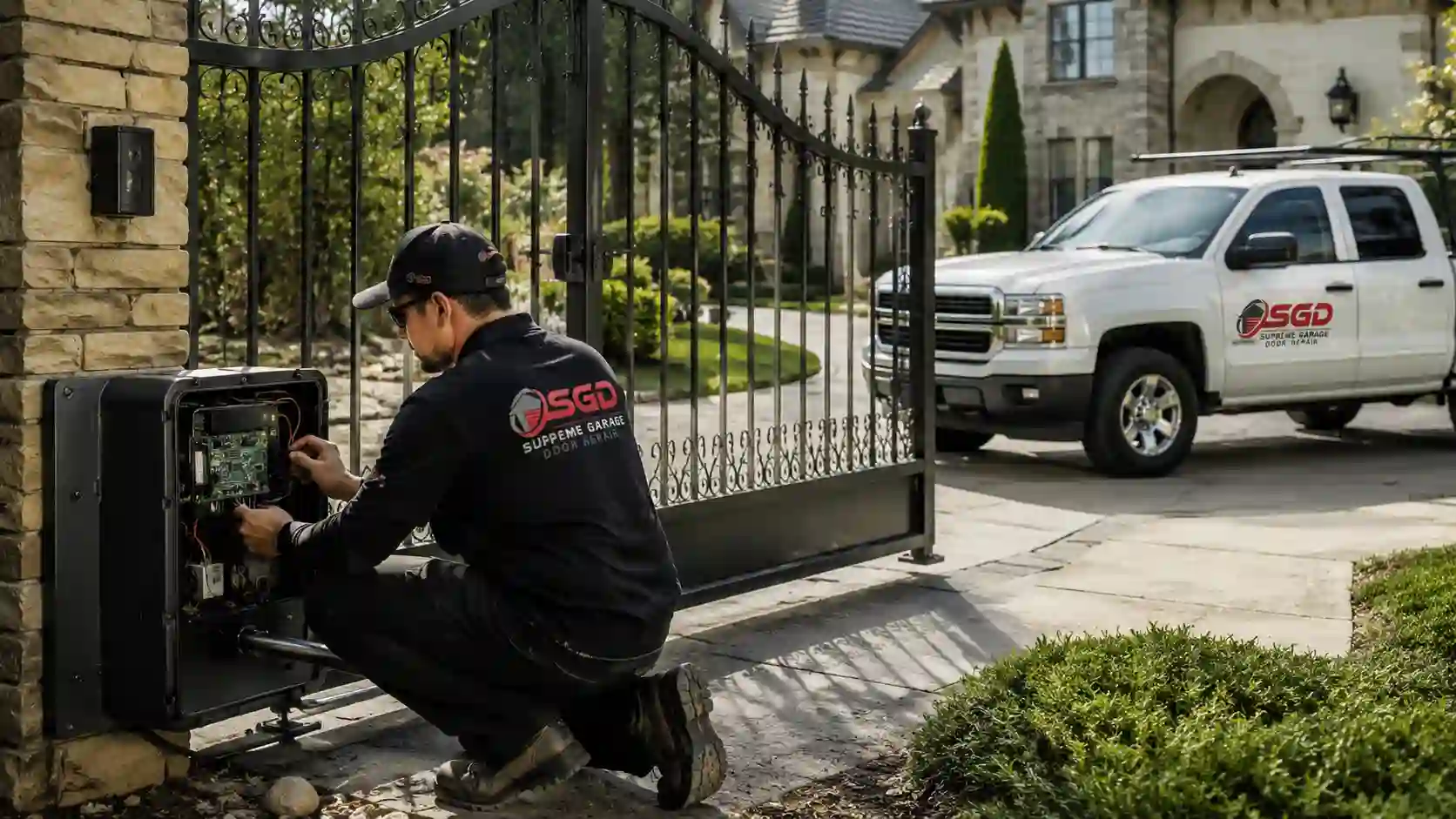
The installer verifies opening dimensions, framing, clearances, floor slope, electrical access, and the condition of any hardware proposed for reuse.
If a door is present, spring tension is controlled before sections and hardware are removed. The work area is cleared and the framing is inspected for hidden damage.
Mounting surfaces must be sound, plumb, and capable of supporting the track and spring hardware. Deteriorated jamb material should be repaired before installation continues.
Door sections are placed in sequence and connected with the specified hinges, rollers, and reinforcement. Incorrect hinge placement can disrupt spacing as the door moves through the curved track.
Vertical tracks are spaced for proper roller clearance. Curved and horizontal tracks are connected, supported, leveled, and aligned so the rollers travel without binding.
The spring system is installed and adjusted for the verified door weight. This work involves stored energy and belongs to trained installers.
Perimeter seals are fitted, and the opener is connected to approved door reinforcement. Travel, force, and safety controls are adjusted according to the opener instructions.
The installer tests manual balance, track movement, cable position, powered operation, emergency release, photo-eye response, and automatic reversal. The homeowner should receive operating guidance, warranty information, and maintenance instructions.
A finished door should not be judged by appearance alone. Before the system is handed over, the installation should be reviewed from the framing and track supports through the opener and safety controls.
The installer should explain any property condition that limits sealing or operation, such as an uneven slab, damaged jamb, low headroom, or obstructed ceiling area. These conditions should not be hidden by excessive opener-force adjustment or improvised hardware.
Many straightforward single-door replacements can be completed within one service visit, but there is no reliable universal time. Framing repairs, special track configurations, custom door sections, electrical work, opener replacement, weather conditions, and disposal requirements may extend the project.
A responsible estimate should distinguish installation time from product ordering time. Custom colors, windows, materials, or sizes may require additional lead time before work can begin.
Compare written scopes rather than headline prices. A lower quote may exclude an opener, perimeter seals, disposal, framing work, permits when applicable, or final safety testing.
A replacement project begins with an existing opening and may involve decisions about reusable hardware, framing condition, and disposal. New construction provides more opportunity to coordinate framing, electrical outlets, ceiling storage, lighting, and opener placement before the door arrives.
In both cases, the finished opening and clearances should be verified after framing and surface materials are complete. Plans alone may not reflect the final dimensions.
Dallas heat, sunlight, windblown dust, thunderstorms, and temperature changes can influence door selection and maintenance. South-facing doors may receive prolonged sun exposure, while low areas near the threshold may collect stormwater. Durable finishes, compatible seals, protected hardware, and adequate ventilation can support long-term performance.
For an attached garage, consider how insulation and air sealing affect adjacent living areas. Insulation does not correct gaps caused by an uneven floor, damaged framing, or poor track adjustment, so product selection and installation quality both matter.
With the door closed, panel joints should appear consistent and perimeter seals should contact the opening without severe compression or obvious gaps. Tracks should be firmly supported, fasteners should be seated, and cables should remain correctly positioned.
During operation, the door should move evenly without scraping, shaking, or abrupt changes in speed. When disconnected from the opener according to the manufacturer's instructions, a correctly balanced door should not feel excessively heavy or move uncontrollably. Safety sensors and automatic reversal must respond as specified by the opener manufacturer.
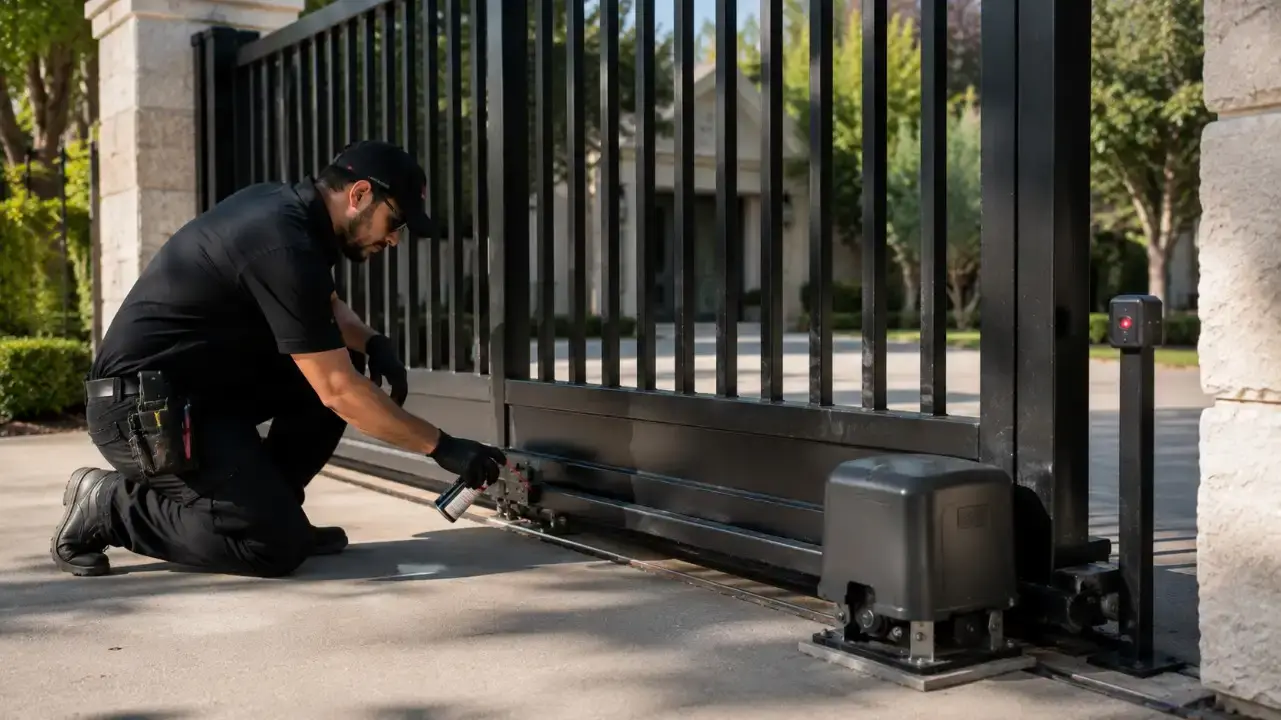
Inspect the door visually each month and watch a complete operating cycle. Keep the track area clear, clean the photo-eye lenses, test safety reversal as directed, and use only manufacturer-approved lubricant on specified parts. Arrange professional garage door repair if the door becomes uneven, unusually noisy, difficult to lift, or unreliable.
Do not adjust springs, cables, drums, or bottom brackets. Keep the door model, opener model, warranty documents, installer invoice, and maintenance record together for future service.
A complete installation record supports warranty service, future repairs, and safe maintenance. Ask for the final invoice and written product information rather than relying only on a verbal explanation.
Manufacturer instructions should remain the primary reference for product-specific maintenance. If a recommendation from a service provider conflicts with the installed equipment documentation, ask for clarification before proceeding.
Single garage doors are available in several widths and heights. The correct size must be based on the finished opening and available track clearances rather than a general standard.
Garage door installation involves heavy sections and high-tension spring hardware. Professional installation is recommended because incorrect assembly or spring adjustment can cause serious injury and property damage.
Not always. The door and opener may be quoted separately. Confirm whether the proposal includes an opener, controls, sensors, reinforcement, installation, and final programming.
New doors are generally designed and tested with specified track hardware. Reuse should occur only when the manufacturer permits it and a qualified installer confirms compatibility and condition.
Insulation may be valuable for attached garages, conditioned workshops, and openings exposed to strong sun. Seals, windows, wall insulation, and installation quality also influence comfort.
A straightforward replacement may be completed in one visit, while framing repairs, custom hardware, electrical work, or special track layouts can require more time.
The door should move evenly and should not feel excessively heavy during an approved manual test. Balance testing involves the spring system, so request professional adjustment if the door drops, rises, or moves unpredictably.
Coverage varies by manufacturer and installer. Request written terms for door sections, finish, hardware, springs, opener equipment, and labor, including exclusions and maintenance requirements.
A successful installation begins with accurate measurements and ends with documented safety testing. Product compatibility, strong mounting surfaces, correct spring selection, smooth track alignment, reliable sealing, and clear warranty terms all contribute to long-term performance.
Supreme Garage Door Repair provides measurement, product guidance, installation, opener setup, and safety testing for Dallas and surrounding North Texas communities.
Schedule an Installation Estimate