 Skip to content


Why Is My Garage Door So Loud?
Common Causes of a Noisy Garage Door
A noisy garage door may have dry moving parts, loose hardware, worn rollers, track problems, spring issues, or an opener that is under extra strain. The type of sound you hear can often provide clues about which part of the system needs attention.
Some garage door sounds are minor maintenance issues. Others can signal worn or damaged components that should be inspected before the door becomes harder or unsafe to operate.
For homeowners in Dallas-Fort Worth, paying attention to when the noise occurs can make troubleshooting much easier.

What Does a Noisy Garage Door Usually Mean?
Quick answer: A noisy garage door usually means one or more moving parts are dry, loose, worn, misaligned, or under additional strain. The specific sound can help narrow down the cause.
Garage doors contain several moving components that must work together every time the door opens or closes. Rollers move through the tracks, hinges connect the sections, springs help support the door's weight, and the opener provides controlled movement.
As these parts wear, loosen, or develop additional friction, the door can become noticeably louder.
The sound itself matters. A squeak usually points toward a different problem than grinding, rattling, popping, or humming.
Rather than replacing parts based only on noise, watch how the door moves and identify where the sound seems to begin.
Often associated with dry or worn hinges, rollers, bearings, or other moving hardware.
May point to worn rollers, track contact, or internal opener components.
Often linked to loose hardware, brackets, tracks, hinges, or uneven roller movement.
Can involve stressed hinges, panels, rollers, or a garage door spring problem.
May come from the opener or from a door that has become harder for the opener to move.
Squeaking May Come From Dry or Worn Moving Parts
A squeaky garage door often develops when moving components create additional friction.
Hinges, rollers, bearings, and other moving hardware can become louder as lubrication wears away. Worn components may create similar sounds, so lubrication will not solve every squeaking problem.
Listen closely as the door moves.
If the squeaking occurs at the same section of the track every time, a roller or hinge in that area may deserve closer inspection. If the entire door sounds dry or rough, several moving components could be involved.
Maintenance note: Minor lubrication can be part of routine maintenance, but do not apply lubricant to tracks or make adjustments to springs, cables, or other high-tension components.
For doors that remain noisy after basic maintenance, professional garage door repair can help identify whether a worn component needs replacement.
Grinding Can Point to Rollers, Tracks, or the Opener
Grinding is different from a light squeak.
A grinding sound can occur when worn rollers no longer travel smoothly, when a component rubs against the track, or when an opener has worn internal parts.
Watch the door from a safe distance while it operates. Look for shaking, jerky movement, or a roller that does not appear to travel smoothly.
Garage door rollers have a major effect on how smoothly and quietly the door moves. Supreme's garage door roller guide explains that worn rollers can cause grinding, squeaking, rattling, shaking, and vibration.
Persistent grinding should be inspected rather than ignored because it can indicate that parts are rubbing or moving incorrectly.
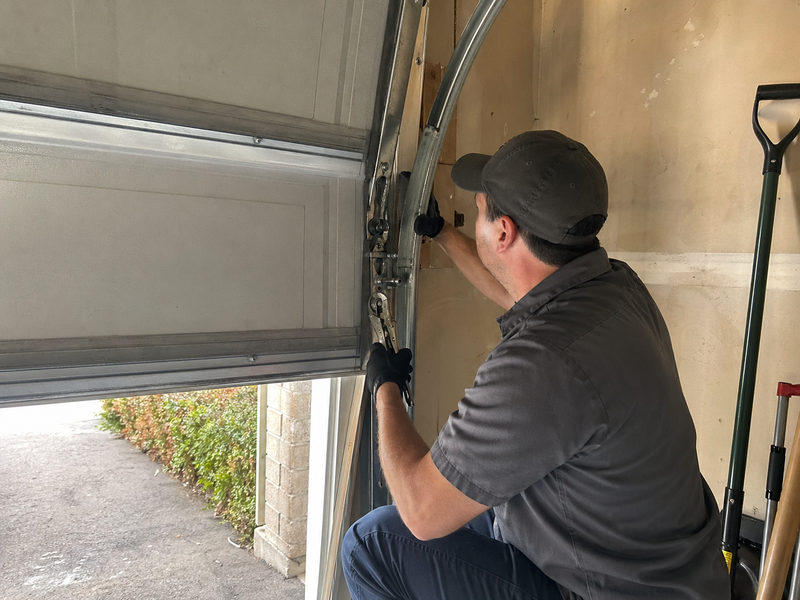
Rattling Often Means Something Is Loose
A rattling garage door may have loose hinges, brackets, fasteners, tracks, or opener hardware.
Garage doors vibrate slightly every time they move. Over time, that repeated movement can contribute to loose hardware.
The door may also rattle because worn rollers move unevenly through the tracks.
A homeowner can visually check for obvious loose or damaged parts, but avoid adjusting anything connected to the spring or cable system.
If the rattling happens together with shaking or uneven movement, arrange a professional inspection. The problem may involve more than one component.
A Popping or Banging Sound Needs More Attention
A sudden pop or bang can have several causes.
A hinge or roller may make a sharp sound as it moves under stress. Door panels can sometimes flex and pop during operation. Spring problems can also create much louder sounds.
One particularly important warning sign is a loud bang followed by a garage door that suddenly feels heavy, opens only a few inches, or will not open normally.
Warning sign: A loud bang followed by lifting problems may indicate a broken garage door spring. Broken springs can also cause crooked movement or a visibly separated spring.
Do not attempt to remove, adjust, wind, or replace garage door springs yourself. Springs operate under significant tension and should be serviced professionally.

Humming or Straining May Come From the Garage Door Opener
Sometimes the loudest part of the system is not the door itself.
A garage door opener may hum, grind, click, vibrate, or sound strained when its motor, gears, rail, trolley, mounting hardware, or other components develop problems.
The opener can also become louder because the garage door is difficult to move.
For example, worn rollers or poor door balance can make the opener work harder than it normally should. That means replacing the opener without inspecting the door may not solve the underlying problem.
Supreme's garage door opener repair service covers noisy motors, worn gears, rails, trolleys, wiring, and other opener components.
If the opener suddenly sounds different from normal, have the entire door and opener system checked together.
Why Did My Garage Door Suddenly Get Louder?
A garage door that becomes noticeably louder over a short period may have developed a new mechanical problem.
Pay attention to what changed.
If the noise began after the door was hit, a track or roller may have moved out of position. If you heard one loud bang followed by lifting problems, inspect the spring visually from a safe distance. If the sound developed gradually, normal component wear may be involved.
Also notice whether the door:
- Shakes or jerks while moving
- Sits unevenly when closed
- Opens more slowly than before
- Stops during travel
- Makes the noise at one specific point
- Causes the opener to sound strained
These symptoms provide more useful diagnostic information than noise alone.

Can I Keep Using a Noisy Garage Door?
It depends on the type of noise and how the door is moving.
A mild squeak without any change in movement may be related to normal maintenance. Loud grinding, repeated popping, severe vibration, crooked movement, or a door that suddenly feels heavy deserves more attention.
Stop operating the door if it comes off track, becomes severely uneven, has a visibly broken spring, has a loose cable, or appears unstable.
Continuing to run a damaged door can place additional strain on rollers, tracks, springs, cables, panels, and the opener. Supreme similarly recommends stopping use when a garage door is severely uneven, off track, unusually heavy, or has loose cables.
Can Regular Maintenance Make a Garage Door Quieter?
Regular maintenance can help with some sources of garage door noise.
A professional inspection can identify loose hardware, worn rollers, hinge problems, poor door balance, spring wear, opener strain, and other developing issues before they become more noticeable.
Maintenance can also help distinguish a simple lubrication issue from a part that actually needs repair or replacement.
Supreme lists ongoing garage door maintenance among its North Texas garage door services and recommends evaluating the whole system rather than looking at only one visible component.
If your door has become progressively louder, scheduling maintenance before a complete failure can help identify the source.
When Should a Noisy Garage Door Be Professionally Inspected?
Schedule an inspection when the noise is new, becoming louder, or accompanied by a change in how the door moves.
Grinding, loud popping, strong vibration, uneven movement, opener strain, or visible component damage all deserve closer attention.
A technician can inspect the rollers, hinges, tracks, springs, cables, opener, and door balance to determine what is actually producing the noise.
Supreme Garage Door Repair provides garage door repair and related services throughout Dallas-Fort Worth and North Texas.
Conclusion
A noisy garage door can be caused by something as simple as dry moving parts or loose hardware, but grinding, loud popping, strong vibration, or opener strain can point to a more significant mechanical problem.
Pay attention to both the sound and the way the door moves. Changes in speed, balance, smoothness, or lifting effort can provide important clues about what is happening. If the noise keeps getting louder or the door no longer moves normally, having the full system inspected can help identify the source before the problem progresses.
Noisy Garage Door Getting Louder?
Get professional troubleshooting for garage door noise and movement problems throughout Dallas-Fort Worth.
Schedule Garage Door Service