 Skip to content


A Garage Door Without Springs can sound like a simpler system, but the topic needs a careful explanation. Most residential sectional garage doors use some type of counterbalance system to help lift the weight of the door. In many homes, that system uses torsion springs or extension springs. If a spring is missing, broken, or no longer doing its job, the door may become very heavy and unsafe to move. Supreme Garage Door Repair helps homeowners understand how garage door springs, cables, tracks, rollers, and openers work together. Before anyone tries to operate a door that seems to have no working spring support, the full system should be checked.

The phrase can describe a door with a broken or removed spring, or a system that uses another type of counterbalance design. Most sectional garage doors rely on springs to help balance the door's weight and reduce strain on the opener. If a torsion or extension spring breaks, the door may feel much heavier, open only a few inches, or cause the opener to struggle. For a closer look at the parts involved, Supreme's garage door parts diagram explains how springs, cables, rollers, tracks, and other components work together.
A Garage Door Springless System needs another safe way to control and balance the weight of the door, so removing traditional springs does not automatically create a simpler setup. Some designs use different lifting or counterbalance technology, but the door weight, tracks, cables, opener, and hardware must still work together as one system. Changing these parts without the right design can make the door harder to control and place extra strain on other components. If you are unsure what type of system your door uses, Supreme's garage door springs guide explains how common spring systems support safe garage door operation.

A garage door can weigh far more than most people expect. Springs help offset that weight so the door can move in a controlled way. When the spring system is properly balanced, the opener does not have to lift the full weight by itself. Torsion springs are commonly mounted above the garage door opening on a shaft. As the door moves, the spring system works with drums and cables to help control the door's weight. Extension springs use a different layout and usually stretch along the horizontal track area. The spring system also affects balance. A properly balanced door should move more smoothly and place less stress on the opener, rollers, tracks, and other hardware. If a spring breaks, continuing to use the opener may place added stress on the motor and lifting system.
A damaged spring may not always be obvious at first. Some warning signs appear only when the door starts moving. Watching and listening to the door can help homeowners notice a problem early.
Do not keep pressing the opener button if the door is clearly struggling. Repeated attempts can place more stress on the opener and other parts. Homeowners should also avoid touching loose cables or damaged spring hardware because these parts can carry significant tension.
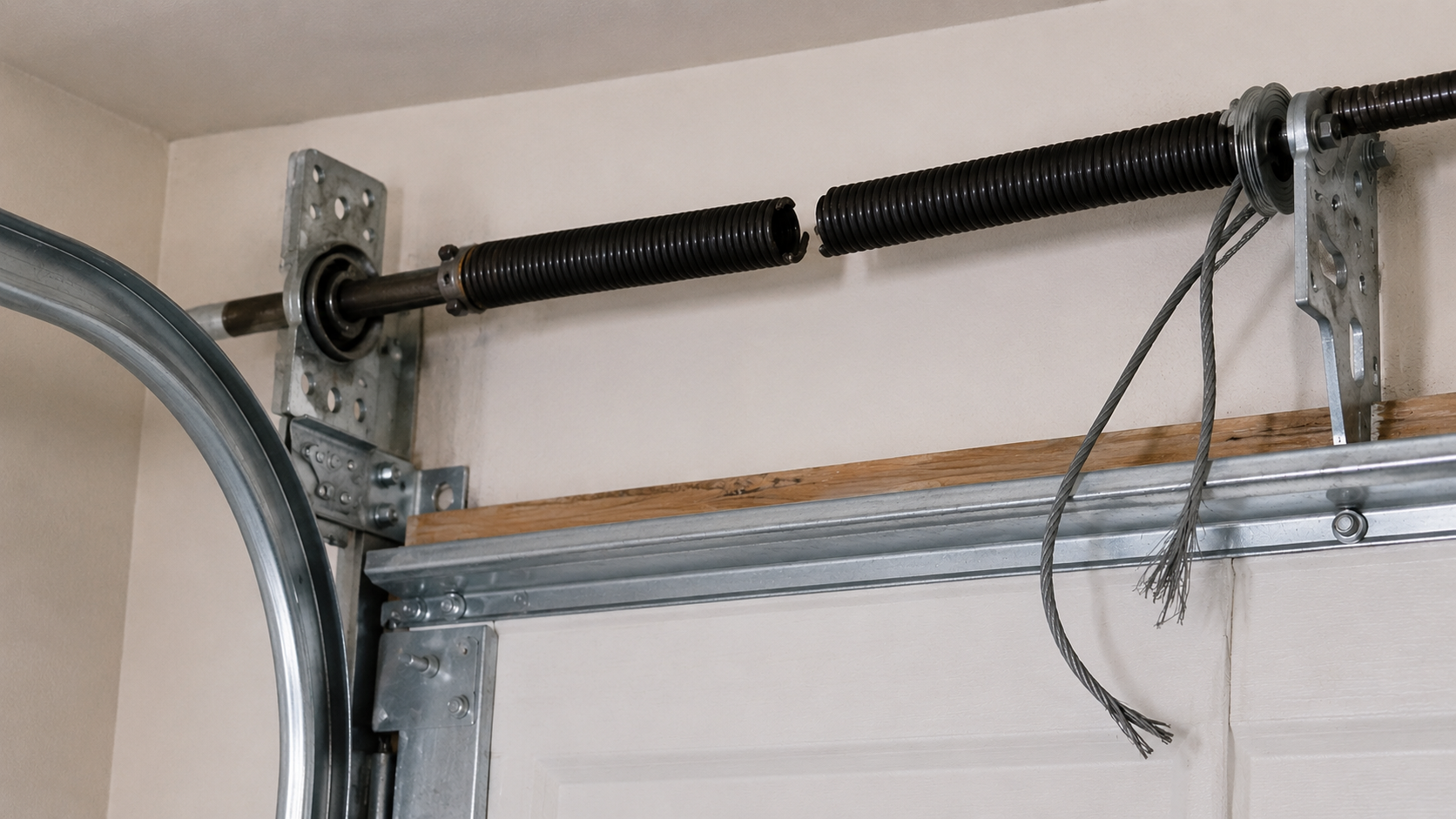
Installation depends on the exact garage door design, and the counterbalance system must match the door's weight, tracks, cables, opener, and hardware. Removing springs from a standard sectional door can make it unsafe if the system was built to rely on them. Routine maintenance should focus on safe tasks such as keeping tracks clear, checking rollers and hinges, inspecting weather seals, and watching for unusual movement. Avoid adjusting spring tension, loosening bottom brackets, or removing lifting cables because these parts may stay under high tension even when the door is closed. For traditional torsion systems, Supreme's garage door torsion springs resource explains how this common counterbalance setup works.
Dallas homeowners may notice spring problems after years of daily use or when other garage door parts begin placing more strain on the system. Heat, frequent cycling, worn rollers, poor balance, and aging hardware can all affect how a garage door performs over time. Homeowners who need local help can visit Supreme's Garage Door Repair Dallas. Supreme Garage Door can inspect springs, cables, tracks, rollers, opener operation, and door balance to identify what is causing the problem. If a door appears to have no working spring support, stop using it until the lifting system has been checked. The correct solution depends on the door type and the parts originally designed for that system.
Some specially designed systems may use another type of counterbalance method, but most standard residential sectional doors rely on springs. A standard door should not simply have its springs removed and continue operating as normal.
The door may become very heavy, open only a few inches, move unevenly, or stop operating. The opener may also strain because it is being asked to lift more weight than normal.
It is safer to avoid operating a door with a confirmed broken spring. The door can be heavy and difficult to control, and forcing it open may affect cables, tracks, the opener, or other parts.
Not automatically. Any garage door still has moving parts, guides, hardware, and safety requirements. Maintenance depends on the actual system design rather than simply whether conventional springs are present.
No. Removing springs from a standard sectional garage door can make the door extremely heavy and unsafe. Any change to the lifting or counterbalance system should follow the door manufacturer's design and be handled by a trained technician.
A Garage Door Without Springs should not be treated as a standard garage door with the springs simply taken away. Most residential sectional doors rely on a counterbalance system to help control the door's weight and support smooth movement. If a spring is broken, missing, or no longer balancing the door, avoid forcing the opener to keep working. The safest next step is to identify the door type, inspect the lifting system, and determine which components the door was designed to use. Supreme Garage Door can inspect the spring system, cables, tracks, rollers, balance, and opener to help homeowners understand what their garage door needs. Call Supreme Garage Door at (972) 846-9991 to schedule an inspection.
Contact Supreme Garage Door for a professional inspection of your springs, cables, balance, and lifting system.
Schedule Garage Door Spring Service