 Skip to content


Why Is My Electric Garage Door So Fickle? Common Reasons Your Garage Door Works Intermittently
If your garage door opener works intermittently, the problem may come from the remote, safety sensors, power supply, wiring, opener controls, or worn internal components. The door might work normally in the morning, refuse to respond later, then suddenly start working again.
Intermittent problems can be frustrating because the system may appear normal when you try to diagnose it. Instead of replacing random parts, pay attention to when the problem occurs and which controls still work.
For homeowners across Dallas-Fort Worth, these symptoms can help narrow down whether the problem is with the opener itself or another part of the garage door system.
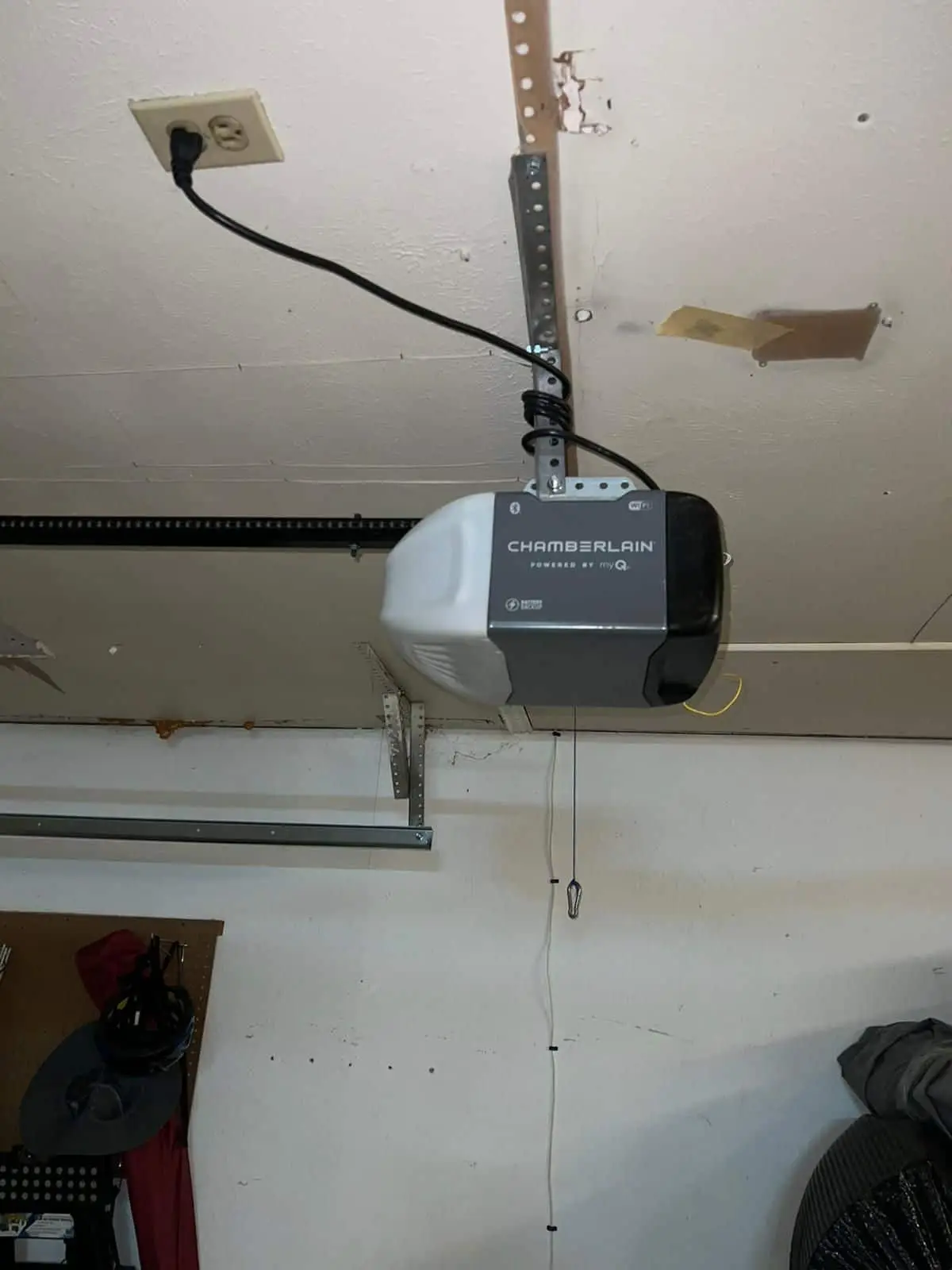
Why Does My Garage Door Opener Work Only Sometimes?
Quick answer: A garage door opener that works only sometimes is usually losing either a reliable control signal, electrical connection, safety-sensor signal, or consistent mechanical operation.
Sometimes the opener is functioning correctly but another garage door component creates enough resistance that the opener stops or refuses to complete its cycle.
Supreme Garage Door Repair lists weak remote batteries, wiring problems, failing sensors, control-board problems, and signal interference among common causes of intermittent opener operation.
Before assuming the entire opener has failed, check how the system behaves from different controls.
-
The Remote Battery or Remote Control Is Failing
Start with the simplest possibility.
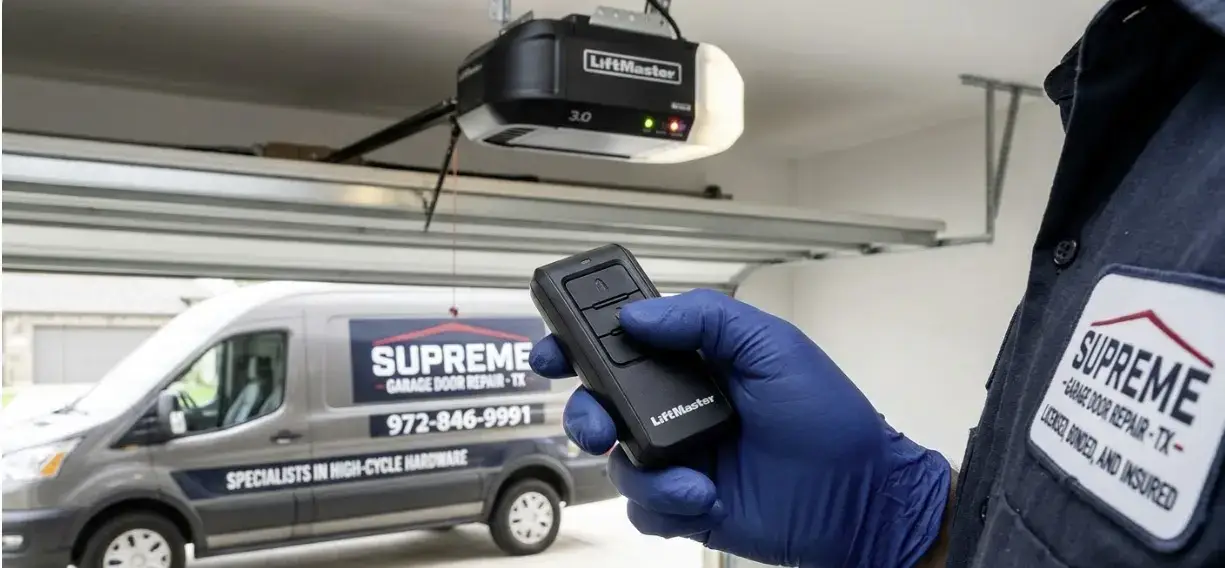
If the garage door responds reliably to the wall control but only works occasionally from the handheld remote, the remote may be the problem.
A weak battery can reduce operating range or produce inconsistent responses. The remote itself may also have damaged buttons or another internal fault.
Try operating the opener from the wall control. If the wall button consistently works while the remote does not, that gives you useful information before scheduling service.
You can also learn more about professional garage door opener repair if replacing the battery does not solve the problem.
-
Signal Interference Is Affecting the Opener
Wireless garage door remotes depend on a clear radio signal reaching the opener.
Nearby electronics, certain lighting products, or other sources of interference can sometimes reduce the effective range of the remote. You may notice that the remote works when you stand close to the garage but becomes unreliable from the driveway.
If the wall control works normally while multiple remotes behave inconsistently, signal or receiver problems may deserve closer inspection.
Avoid opening the motor housing or attempting electrical repairs yourself. A technician can determine whether the issue comes from interference, the receiver, or the opener's electronics.
-
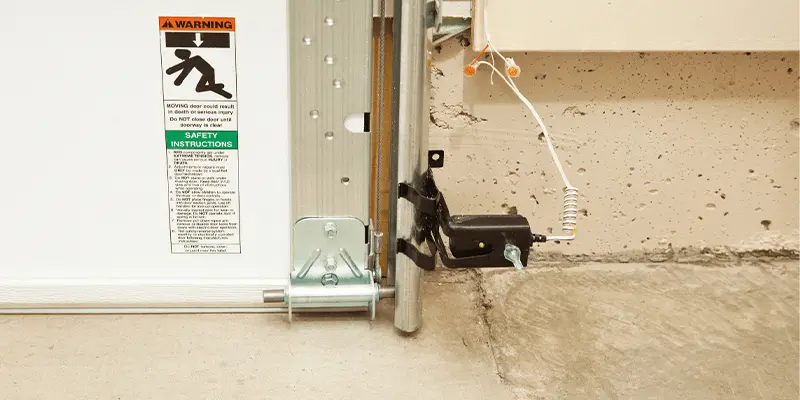
Garage Door Safety Sensors Are Losing Alignment
Safety sensors sit near the bottom of the garage door opening and monitor the path of the closing door.
If they become dirty, blocked, loose, or misaligned, the door may refuse to close or may reverse unexpectedly.
Sensor problems can also seem intermittent. A sensor may remain aligned most of the time but move slightly because of vibration or a loose bracket. Dirt or direct sunlight can also affect how some systems behave.
Check that nothing is blocking the sensors and gently clean the lenses if needed. Do not bypass or disable the safety system.
Supreme has additional information about garage door sensor problems if your symptoms mainly occur while closing.

-
The Opener Is Losing Power
An opener that completely shuts off and later comes back to life may have a power-related problem.
Check whether the opener lights and wall control also stop functioning when the problem occurs. A loose plug or an issue with the electrical supply can make an opener appear to fail randomly.
Safety note: Do not remove electrical covers or attempt internal wiring repairs.
-
Internal Wiring or Controls May Be Failing
Garage door openers contain wiring, switches, control boards, receivers, and other electronic components that can wear or develop inconsistent connections.
These faults are harder for homeowners to identify because the opener may work perfectly during one cycle and fail during the next.
One useful clue is whether the problem affects every control.
If the remote, keypad, and wall control all stop working at the same time, the issue is less likely to involve one individual remote. The opener or its power and control system may need inspection.
Schedule an opener inspection if the problem is becoming more frequent instead of trying to access internal electrical components.
-
The Garage Door Is Making the Opener Work Too Hard
The opener is only one part of the system.
Springs help counterbalance the weight of the door, while rollers, tracks, cables, and hinges help it travel smoothly. If one of those components develops a problem, the opener may struggle, stop halfway, or behave inconsistently.
Supreme's troubleshooting guide explains that a door that opens only a few inches and stops can have problems involving springs, cables, opener components, or resistance in the track system.
If the door jerks, hangs unevenly, becomes unusually heavy, or has a visibly damaged spring or cable, stop operating it and arrange professional service.
Important: Do not attempt to adjust garage door springs or high-tension cables yourself.

-
The Garage Door Opener Is Wearing Out
Sometimes intermittent performance is an early sign that an opener is reaching the point where repairs are becoming more frequent.
A worn motor, gear, circuit board, receiver, or drive component may operate correctly during some cycles and fail during others.
That does not automatically mean the opener needs replacement.
A technician can inspect the opener and determine whether one repair makes sense or whether the condition and repair history justify considering a newer unit.
For a more detailed comparison, see Supreme's guide to garage door opener repair versus replacement .

How Can I Tell Whether the Remote or Opener Is the Problem?
Compare how the door responds to the wall control, remote, and keypad.
Start with the remote battery and programming. The individual remote may be the source of the problem.
Signal interference, the receiver, or another wireless-control problem may be involved.
The opener, power supply, safety system, or another garage door component may need inspection.
If only one remote fails, start with its battery and programming. If several wireless controls fail but the wall button still works, signal or receiver problems may be involved.
If every control becomes unreliable, the issue may be inside the opener, its power supply, safety system, or another part of the garage door.
Also pay attention to whether the problem happens only while opening, only while closing, or during both directions. That information can help a technician diagnose the fault more efficiently.
Should I Keep Using an Intermittent Garage Door Opener?
Occasional remote trouble does not always mean the garage door is unsafe, but repeated stopping, jerking, reversing, or inconsistent movement should not be ignored.
Stop operating the door if it becomes crooked, unusually heavy, comes off track, has a broken spring or cable, or moves in a way that appears unstable.
If the door itself moves normally but the opener continues responding unpredictably, schedule an inspection before the problem becomes a complete failure.
Preventive garage door maintenance can also help identify developing problems with sensors, door balance, opener operation, and moving components.
Conclusion
If your garage door opener works intermittently, the cause could be as simple as a weak remote battery or as complex as a sensor, power, wiring, opener, or mechanical problem. Comparing the remote, keypad, and wall control can help narrow down where the issue may be coming from.
Pay attention to how the door moves as well. Jerking, uneven movement, unusual heaviness, repeated stopping, or damaged springs and cables can point to a problem beyond the opener itself. When the cause is not obvious or the problem keeps returning, having the complete garage door system inspected can help identify the issue without replacing parts based on guesswork.
Garage Door Opener Working Intermittently?
Get professional troubleshooting for inconsistent garage door opener problems throughout Dallas-Fort Worth.
Schedule a Garage Door Inspection