 Skip to content


How to Get Mice Out of Garage starts with finding what is attracting them and how they are getting inside. Mice look for food, water, warmth, and quiet places where they can hide. A garage can offer all four, especially with boxes, pet food, birdseed, or gaps around the door Many mouse problems can be reduced with simple steps. Cleaning the space, removing food sources, using suitable traps, and closing entry points can make your garage less inviting. Worn bottom seals or corner gaps may also create an easy path inside. Supreme Garage Door Repair helps homeowners maintain garage doors, seals, and related parts that help close gaps around the opening. For an active mouse problem, especially a large infestation, a licensed pest-control professional may also be needed.
Mice enter garages because they offer shelter from weather and predators. Quiet corners, cardboard boxes, stored clothing, bags, tools, and other clutter can also create places where mice hide or build nests. Food is another major attraction. Pet food, birdseed, grass seed, snacks, and even small crumbs can keep mice coming back. Open trash containers can also provide an easy food source.
Finding the source matters. Trapping mice without removing food and entry points may only provide a short-term solution.
Start by removing anything that gives mice food or shelter. Put pet food, birdseed, and other dry goods in strong containers with tight lids. Clean crumbs and spills, and avoid leaving garbage inside the garage for long periods. Next, reduce clutter. Move loose items off the floor and replace damaged cardboard boxes with sealed plastic containers when possible. This makes hiding spots easier to find and the area easier to inspect Traps can also be used. Place them where you have seen droppings, chewing, or other mouse activity. Mice often travel along walls rather than through open areas, so trap placement matters. Follow the trap manufacturer's directions, and keep traps away from children and pets. Peppermint scents are sometimes used, but they should not be the main solution. Removing food, using traps, and sealing entry points matter more. If you see many mice, heavy droppings, or signs the problem extends into the home, contact a pest-control professional.

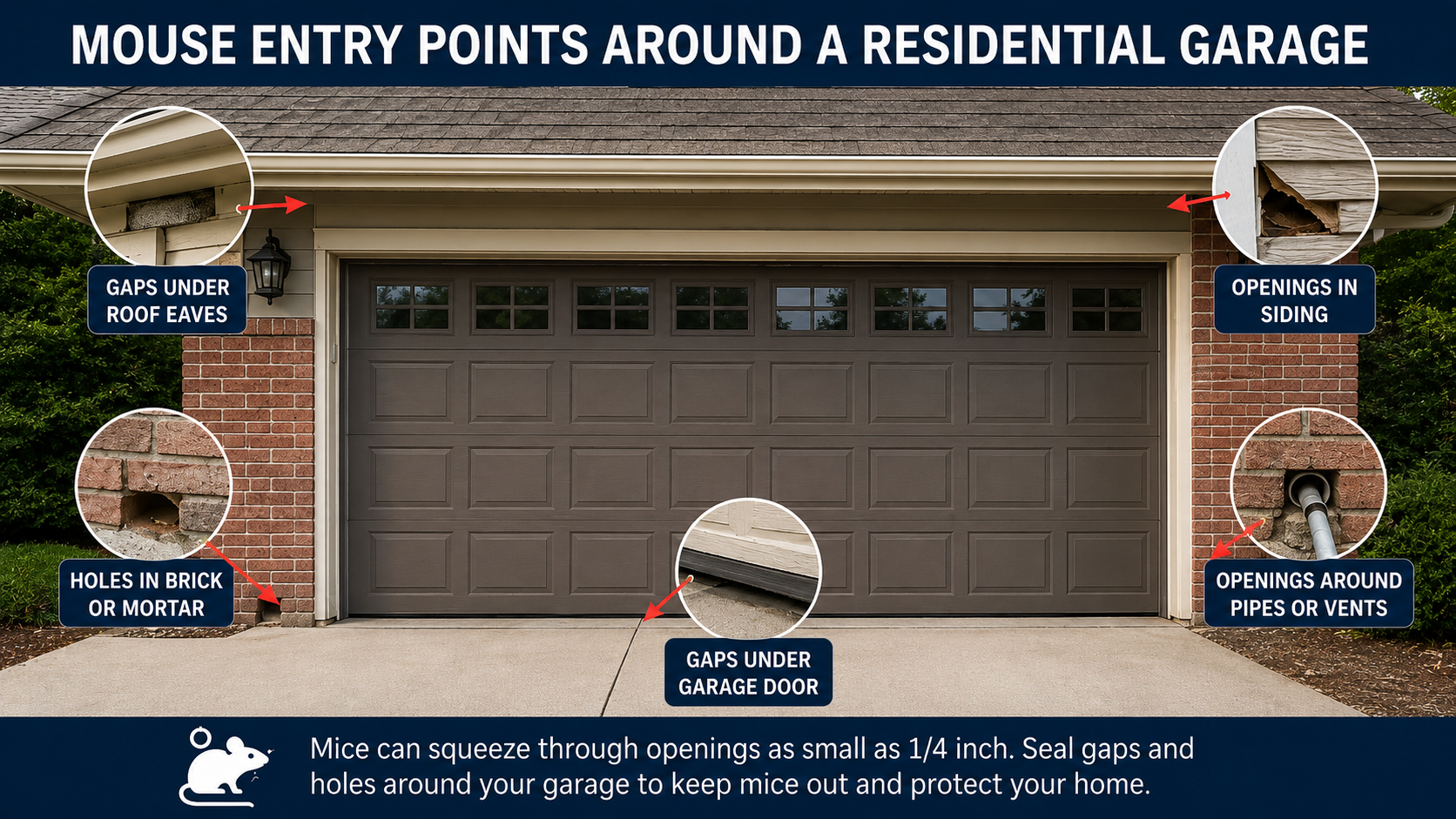
How to Keep Mice Out of Garage is mainly about removing the things that make the space attractive and closing the paths mice use to enter. Walk around both the inside and outside of the garage and look for small gaps. Pay close attention to corners, utility lines, vents, wall openings, and areas around the garage door. Mice can enter through very small spaces, so even a gap that seems minor should be checked.
It can also help to check the garage after storms or major weather changes. Wind, water, heat, and normal wear can affect seals and create new openings around the door. Supreme's garage door weatherproofing guide explains how bottom seals, side weatherstripping, and thresholds help close gaps around the garage opening.
The garage door is one of the largest openings in the building, so small gaps along the bottom and corners can be easy entry points for pests. When the door is fully closed, look for daylight, worn rubber, or areas where the seal does not touch the floor evenly. Supreme's garage door bottom weather seal guide explains common seal types and signs that replacement may be needed. A damaged seal is not always the only cause, since uneven concrete, track issues, or poor door alignment can also leave gaps. Avoid adjusting springs, cables, or other high-tension parts to improve the fit, as those components should be handled by a trained technician.

Dallas garages can face changing temperatures, storms, dust, insects, and other conditions that make pest prevention more important. A clean, organized space is easier to inspect, so check for worn weatherstripping, daylight under the door, leaves near corners, and damaged storage containers. If you notice gaps around the opening, Supreme's Garage Door Repair Dallas provides local information for homeowners in the area. Crickets and other insects can also enter through some of the same small openings, so Supreme's guide to getting rid of crickets in a garage offers additional tips for keeping the space cleaner and less inviting to pests. For an active infestation, contact an appropriate pest-control professional.
Mice often return when food, water, shelter, or an entry point is still available. Clean the garage, seal food containers, reduce clutter, and inspect the walls and door edges for openings.
Yes. If the bottom seal is damaged, flattened, missing, or not touching the floor evenly, small gaps can remain. Corner gaps and uneven concrete may also create openings.
Strong scents may discourage mice for a short time, but they should not replace trapping, cleaning, and sealing entry points. If mice can still reach food and shelter, scent-based repellents alone may not solve the problem.
Avoid sweeping or vacuuming dry droppings because this can spread particles into the air. Follow current public-health guidance for safe cleanup, including ventilation, disinfecting, and protective gloves. For heavy contamination, consider professional help.
Professional help is a good idea when you continue seeing mice after trapping and sealing, find several nesting areas, notice a large amount of droppings, or suspect mice have entered walls or other parts of the home.
How to Get Mice Out of Garage is easier when you deal with both the mice and the conditions that brought them inside. Remove food sources, reduce clutter, place traps safely, and check the garage for small entry points. Pay special attention to the garage door perimeter, since a worn bottom seal, corner gap, or damaged weatherstripping can leave an opening for pests, dust, water, and outdoor debris. Supreme Garage Door can inspect garage door seals and related door components when gaps around the opening are part of the problem. For an active or serious mouse infestation, work with a qualified pest-control professional. If you need help with garage door gaps or worn seals, call Supreme Garage Door at (972) 846-9991.
Contact Supreme Garage Door to inspect worn seals, corner gaps, and other garage door openings that may allow pests and outdoor debris inside.
Schedule a Garage Door Inspection