 Skip to content


Garage Door Maintenance helps keep your system moving smoothly and makes early signs of wear easier to spot. Regular care can reduce strain on springs, cables, rollers, tracks, hinges, sensors, and the opener. Small changes in sound or movement may show that part of the system needs attention before a larger problem develops. Supreme Garage Door Repair provides maintenance and tune-up services for residential and commercial garage doors across North Texas.
A garage door may open and close several times each day, so its moving parts deal with steady use. Rollers turn, hinges move, springs carry tension, cables help lift the door, and the opener guides each cycle. Over time, normal wear can change how smoothly these parts work together. Early signs are often easy to overlook. You may hear a new squeak, notice a small shake, or see the door move more slowly than before. These changes do not always mean a major part has failed, but they can show that the system needs attention. Regular Garage Door Maintenance can make those small changes easier to catch before they affect daily use. Routine care can also help find loose hardware, dry moving parts, worn rollers, sensor problems, or balance changes before they become larger issues. If your door is becoming louder, Supreme's guide to a garage door making loud noise explains common sounds and when they should be checked.
Garage Door Preventive Maintenance focuses on finding developing problems before they interfere with daily operation. Instead of waiting for the door to become stuck or stop moving, the system is checked while it is still operating.
Each part affects the way the door operates. A worn roller can create noise and uneven movement. A balance problem can place more strain on the opener. Dirty or poorly aligned sensors may affect closing. Loose hardware can also create vibration or rattling. Maintenance does not mean every part needs to be replaced. The purpose is to inspect the system, identify normal wear, make suitable adjustments, and explain anything that may need attention later. This gives homeowners a clearer picture of the door's condition and helps them plan service before small issues become harder to manage.
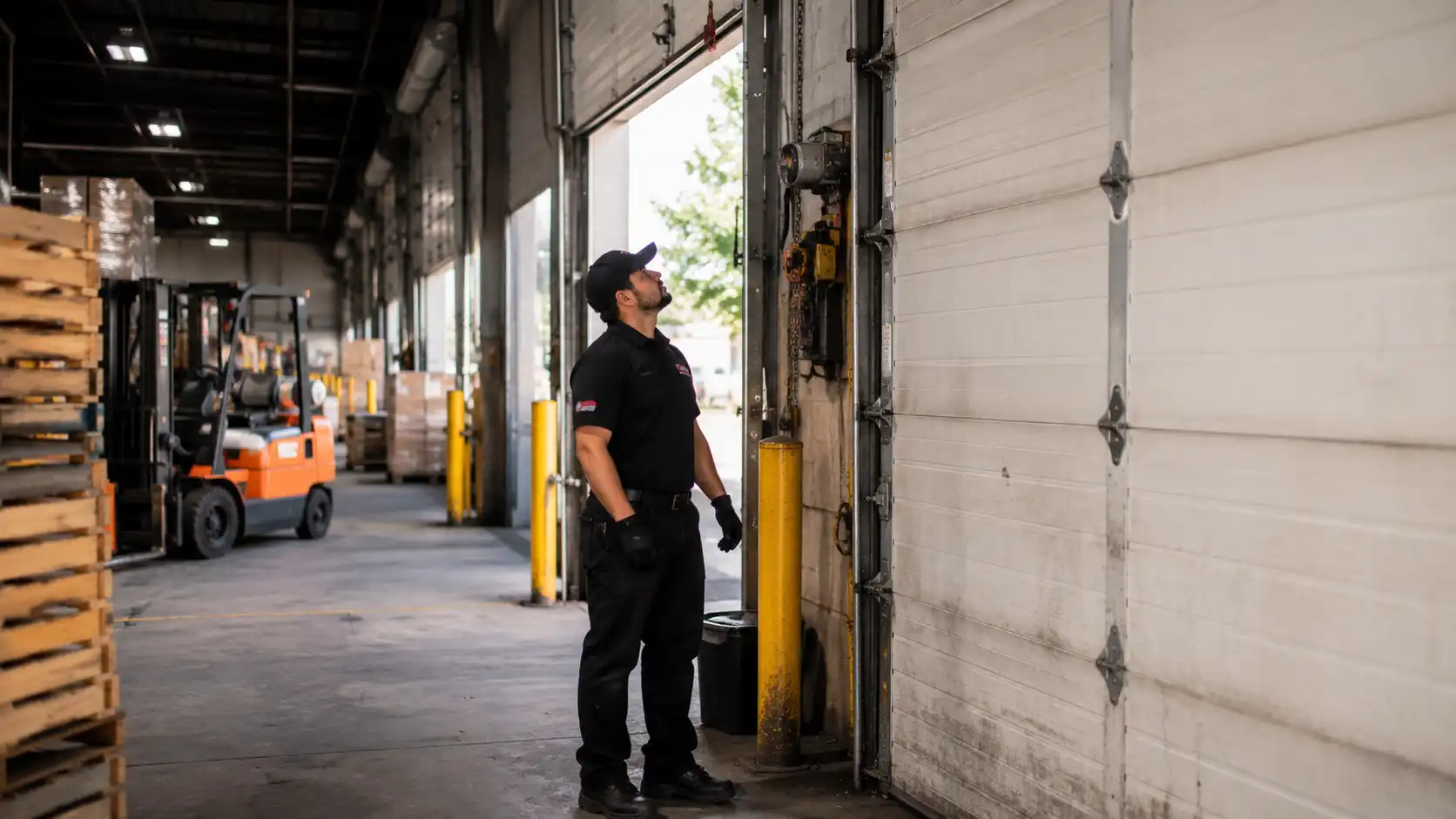
Homeowners can perform a few basic visual checks between professional visits. Start by watching the door complete one full opening and closing cycle. It should travel smoothly without shaking, leaning, dragging, or making sudden movements. Listen for new sounds such as grinding, scraping, popping, or repeated rattling. A small change in sound can sometimes be the first sign that a roller, hinge, track, or another moving part needs attention. Also notice whether the door starts and stops at the same points each time and whether both sides appear to move evenly. Simple observations like these can help you describe the problem clearly if professional service is needed.
Do not adjust springs, cables, drums, bottom brackets, or other high-tension parts yourself. These components can hold significant force even when the door is closed. If something looks loose, damaged, or out of place, stop using the system until it can be checked.
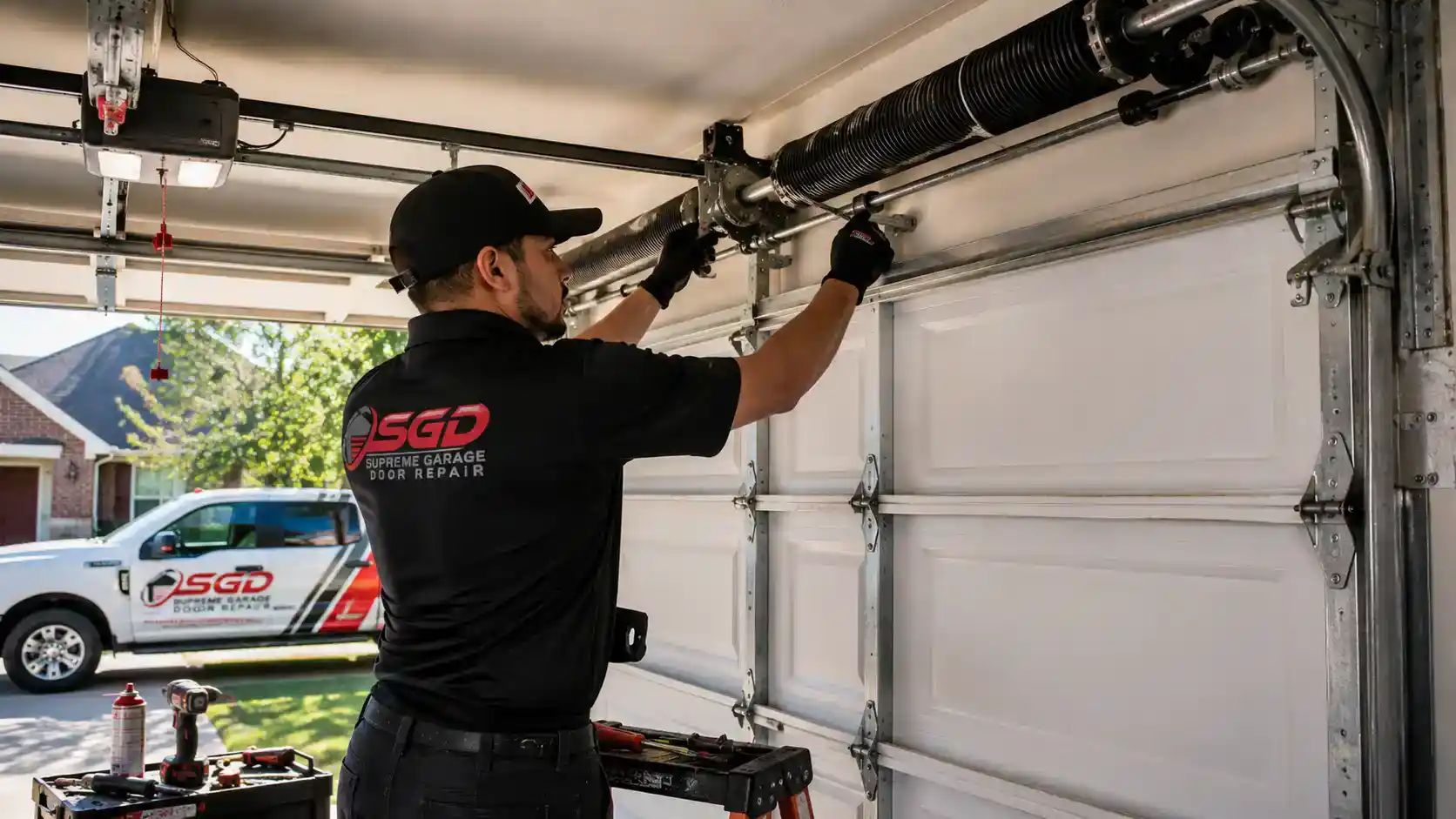
Professional Garage Door Maintenance goes beyond a quick visual check. The technician may inspect rollers, hinges, springs, cables, tracks, weather seals, opener parts, and safety sensors while checking balance and movement. Moving parts may be lubricated, and loose hardware can be adjusted when needed. Supreme's guide on how to tune up a garage door explains the purpose of these checks in more detail. A good tune-up should leave you with a clear understanding of what is working well and what may need attention next.
Dallas weather can affect garage door parts throughout the year. Strong summer heat, dust, changing temperatures, and seasonal storms can add wear to seals, hardware, rollers, and other exposed parts. During hot weather, flexible seals can dry or flatten, dirt can collect around moving parts, and metal hardware may need closer inspection. Keeping the door clean and watching for new sounds or movement changes can help you notice problems earlier. Seasonal Garage Door Maintenance is also a good time to check weather seals, sensor lenses, visible hardware, and the general condition of the door before heavy use continues. Supreme's Texas summer garage door maintenance guide covers seasonal checks such as hardware inspection, lubrication, weather protection, and professional maintenance for hot conditions. Homeowners who need local service can visit Supreme's Garage Door Repair Dallas. Routine maintenance is useful for both residential and commercial doors, especially systems that open many times throughout the day.
Most residential doors benefit from an inspection and tune-up about once a year. Doors that are used many times each day, older systems, and commercial doors may need more frequent checks.
Watch for new noises, slower movement, shaking, uneven travel, poor sensor response, worn rollers, loose hardware, or changes in how the opener works. These signs can show that part of the system needs attention.
Some moving parts may be lubricated according to the door manufacturer's instructions, but not every component should receive lubricant. Never use lubrication as a way to cover up bent, broken, or badly worn parts.
Yes. A maintenance visit may include opener performance, safety sensors, remotes, wall controls, travel, and other connected parts. The opener and the door need to work together for smooth operation.
No. Parts still wear out and can eventually fail. Regular care cannot prevent every problem, but it can help identify wear earlier, improve daily movement, and reduce the chance that small issues go unnoticed.
Garage Door Maintenance is a practical way to keep track of how your door is performing. Regular inspections, proper lubrication, balance checks, sensor testing, and attention to springs, cables, rollers, tracks, and opener parts can help the system continue to move smoothly. Homeowners can handle basic visual checks, but high-tension parts should be left to trained technicians. Supreme Garage Door provides maintenance and tune-up support for residential and commercial properties across North Texas. Call Supreme Garage Door at (972) 846-9991 to schedule a maintenance inspection.
Contact Supreme Garage Door for inspection, tune-up, lubrication, balance testing, and safety checks based on your door's condition.
Schedule Garage Door Maintenance