 Skip to content


Gate Opener Installation can make daily access easier, safer, and more convenient for a residential or commercial property. Instead of opening a gate by hand each time a vehicle enters or leaves, an opener can control the gate through remotes, keypads, sensors, or other access devices. The right setup depends on the gate type, weight, movement, available power, and how the entrance is used. Supreme Garage Door Repair provides gate installation, automation, opener, and access-control services across North Texas.
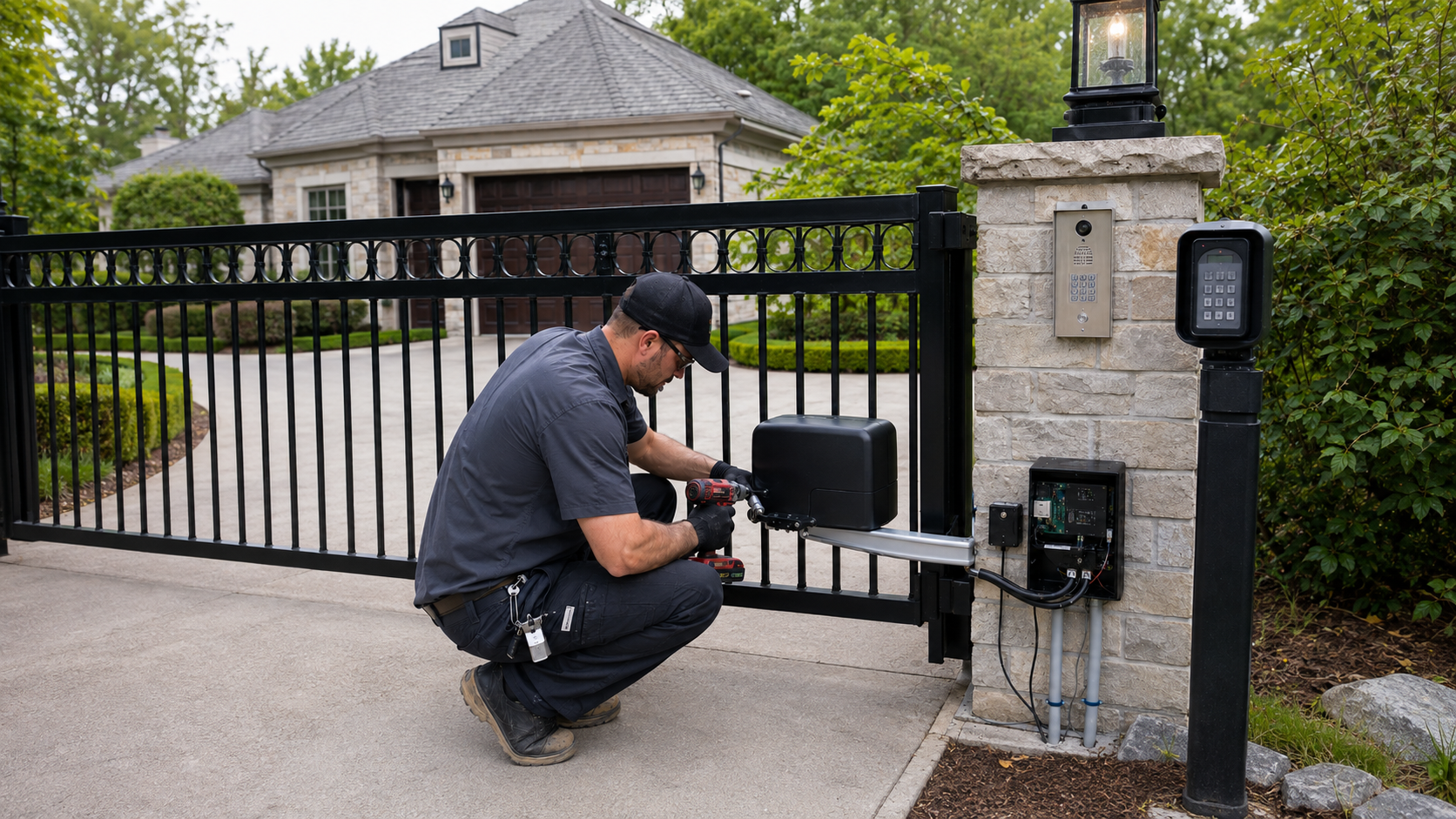
A gate opener uses a powered operator to move the gate when it receives a command. The command may come from a remote, keypad, intercom, access-control system, or another connected device. The opener must work with the gate's size, weight, direction of travel, and mounting setup. Swing gates move inward or outward on hinges, while sliding gates travel along the entrance. Each design needs a suitable operator and enough clear space to move without hitting vehicles, landscaping, walls, or other objects.
The gate itself also matters. A weak, dragging, or badly aligned gate can put extra strain on a new opener. Before adding automation, the gate should move correctly and have solid hinges, rollers, tracks, or supporting hardware. Supreme's gate installation resource explains how gate design, access controls, and automatic systems work together.
Automatic Gate Opener Installation should begin with the gate itself, not just the motor. A technician should check how the gate moves, where the operator can be mounted, and whether the entrance has enough space for safe travel. The gate should move freely before automation is added. Power is another important part of the plan. Some systems rely on a nearby electrical supply, while the exact setup depends on the opener and property. Wiring, controls, sensors, and accessories also need suitable locations where they can work reliably. The installer should also consider how people will enter the property. A homeowner may want remotes and a keypad, while a business could need a more advanced access-control setup. Planning these details before installation can prevent the system from becoming harder to use later.
Not every opener fits every gate. The correct operator should match the gate's movement, weight, size, and expected use. A light residential swing gate has different needs from a long commercial sliding gate that opens many times each day.
Choosing the operator only by price can lead to a poor match. A system that is too weak for the gate may struggle, move slowly, or place unnecessary stress on the motor and hardware. Supreme's electric gate opener installation article explains more about powered gate systems and access options.
A professional installation usually starts with an inspection of the existing gate and entrance. The technician checks how the gate moves and whether hinges, rollers, tracks, posts, or other supporting parts need attention before the opener is installed. The operator is then positioned based on the gate type and manufacturer requirements. The mounting point is important because poor placement can affect movement and place stress on the gate. After the operator is secured, the technician connects the necessary controls and safety equipment. Depending on the system, this may include remotes, keypads, sensors, control boards, or other access devices. The final step is testing. The gate should open and close through a complete cycle without dragging, stopping unexpectedly, or striking nearby objects. Controls should respond correctly, and safety devices should be checked before the system is placed into normal use.

Even a well-installed system needs normal care. Gates are exposed to weather, dirt, vehicle traffic, and repeated movement. Over time, alignment changes or worn hardware can affect how hard the operator has to work.
These symptoms do not always mean the opener itself has failed. The cause could involve alignment, rollers, hinges, sensors, controls, wiring, or another part of the gate system. If the gate stops working after installation, Supreme's gate repair page covers service for gate operators, motors, control boards, keypads, smart systems, sensors, and access-control equipment.
Dallas properties use automatic gates for driveways, homes, businesses, apartment communities, and other controlled entrances. A properly matched opener can make daily access easier while helping the gate operate in a controlled way. Homeowners and businesses looking for local service can visit Supreme's Garage Door Repair Dallas for information about local coverage. Supreme Garage Door works with residential and commercial gate systems across Dallas-Fort Worth and North Texas, including gate operators, motors, sensors, remotes, access controls, and related automation equipment.
Often, yes. The gate should first be inspected to make sure it moves correctly and can support automation. Its condition, weight, design, available space, and hardware all affect whether an opener can be added without replacing the gate.
A swing gate opener moves a hinged gate inward or outward. A sliding gate opener moves the gate sideways across the entrance. Each system uses different mounting and operating equipment.
Many automatic gate systems can support more than one access method. Depending on the equipment, this may include remotes, keypads, intercoms, smart controls, or other access devices.
Possible causes include an obstruction, sensor issue, poor alignment, worn hardware, control problem, or an opener that is struggling to move the gate. The whole system should be checked before replacing the motor.
Yes. The gate should continue to move smoothly, and sensors, access controls, mounting hardware, rollers, hinges, or tracks should be checked for developing problems. Early attention can reduce strain on the operator.
Gate Opener Installation works best when the opener is selected for the gate rather than treated as a separate accessory. Gate size, weight, movement, condition, power, access controls, and safety devices all need to work together. Before installing an opener, make sure the gate moves correctly and decide how people will enter the property. A professional can then match the operator to the system, install the controls, and test the gate through full opening and closing cycles. Supreme Garage Door provides gate and automation services for residential and commercial properties across North Texas. Call Supreme Garage Door at (972) 846-9991 to discuss your property and access needs.
Contact Supreme Garage Door for gate opener planning, installation, access controls, and system testing.
Schedule Gate Opener Service