 Skip to content


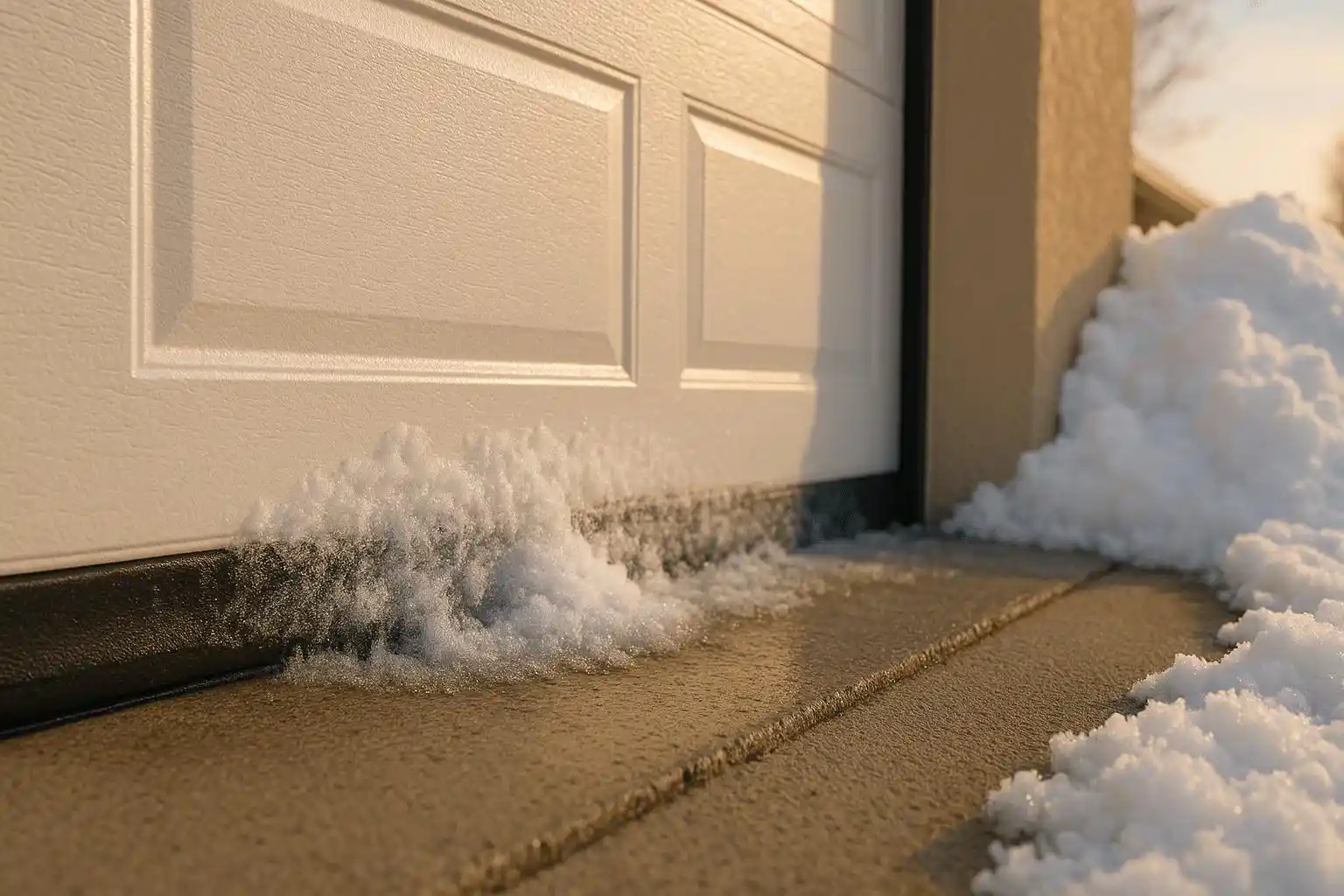
You press the garage door opener before leaving for work, hear the motor start, and expect the door to lift. Instead, nothing happens.
It's a frustrating situation, especially on a cold Fort Worth morning when you're already running late.
After freezing temperatures, a garage door can sometimes become stuck to the concrete because moisture has frozen around the bottom weather seal. But a garage door that won't open after a freeze isn't necessarily frozen to the ground. Broken springs, damaged cables, opener problems, and other mechanical issues can cause similar symptoms.
If you suspect your garage door is frozen shut, stop operating the opener. Do not force the door upward, pry underneath it, or attempt to disconnect tensioned components.
Here's how to recognize a possible frozen bottom seal, what you can safely check, and when to contact a professional garage door technician in Fort Worth.
Fort Worth doesn't experience continuous freezing weather throughout winter, but sudden cold fronts can bring temperatures below freezing.
According to the National Weather Service, freezing temperatures are a normal part of the Dallas-Fort Worth cold season, even though winter conditions vary considerably from year to year.
A garage door can freeze to the concrete when three conditions occur together:
When the opener tries to lift the door, that frozen connection may prevent normal movement.
Water can collect near the garage opening after rain or when the driveway slopes toward the door.
If some of that moisture remains beneath the bottom weather seal as temperatures fall, it may freeze.
A slightly uneven concrete surface can also create low spots where water accumulates.
Garage door bottom seals are designed to help limit water, dirt, debris, and outside air entering beneath the door.
Over time, the flexible material can become cracked, flattened, or damaged.
A deteriorated seal may allow moisture to collect around the lower edge, although even an intact seal can freeze to wet concrete under the right conditions.
Sometimes the issue isn't the garage door itself.
A puddle near the threshold, leaves trapping moisture, or poor drainage around the driveway can contribute to freezing at the bottom of the opening.
Identifying where the water comes from is important if the problem happens repeatedly.
If your garage door won't open after freezing weather, start with safety rather than troubleshooting the opener.
If you activate the opener and the door doesn't move normally, stop.
Repeatedly pressing the remote or wall control may place additional strain on the opener and connected components.
A garage door opener is designed to move a properly functioning garage door, not break a heavy door free from ice.
Continuing to operate the system can potentially damage the opener, its drive mechanism, or the door itself.
If the opener is visibly straining or making unusual noises, avoid further operation until the problem has been assessed.
A garage door is a heavy moving system supported by springs, cables, tracks, and related hardware.
If the door appears crooked, partially lifted, or unstable, keep children, pets, and other household members away from the opening.
Do not stand beneath a damaged garage door or attempt to inspect components by reaching between panels.
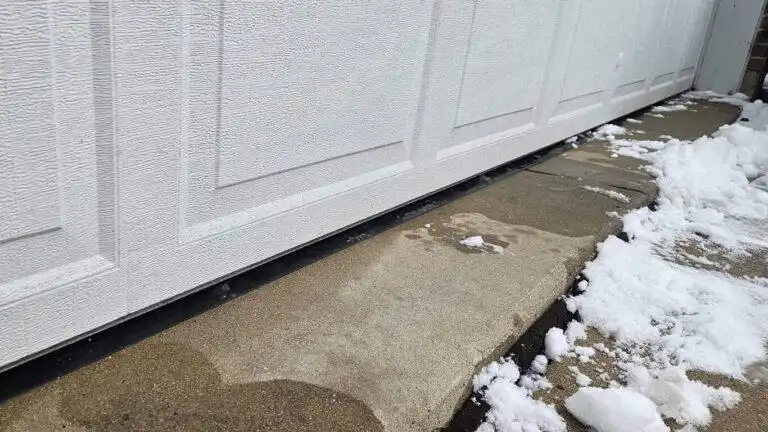
If the door is fully closed and appears stable, look along the accessible bottom edge for signs of ice.
You may notice:
These signs may indicate that the bottom seal is frozen to the floor.
However, visible ice doesn't prove that the rest of the garage door system is functioning correctly.
Avoid touching or prying the seal to test whether it's stuck.
If the door appears frozen to the concrete, the safest approach is often to allow the ice to thaw naturally when temperatures rise.
If necessary, use another safe entrance to access your home or garage.
You can gently clear loose snow or debris from an accessible area of the driveway without touching or disturbing the door assembly.
Avoid pouring boiling water onto the seal, using an open flame, applying a heat gun, or striking the bottom panel with tools.
Hot water can create additional freezing problems, while excessive heat or force can damage the weather seal and surrounding materials.
Do not attempt to lift the door until the frozen connection has released and you're confident there are no other signs of damage.
If the door remains stuck or its condition is uncertain, arrange professional service.
The red emergency release cord is intended to disconnect the garage door opener from the door under appropriate conditions.
It is not a method for breaking ice or forcing a damaged door upward.
If the garage door has a broken spring, damaged cable, or balance problem, releasing the opener may allow unexpected movement.
Do not use the emergency release on a frozen or potentially damaged door unless the manufacturer's instructions and the condition of the system make it safe.
If you're unsure, contact a trained technician.
Cold weather and garage door problems can occur at the same time without having the same cause.
For example, a garage door may refuse to open during freezing conditions because a spring has broken, rather than because its weather seal is stuck.
Look for the following differences.
| What you notice | Possible explanation | Recommended action |
|---|---|---|
| Ice visible where the door meets the concrete | Bottom seal may be frozen to the threshold | Stop operating the opener and allow safe thawing |
| Opener hums but the door doesn't move | Frozen seal, mechanical resistance, or opener problem | Stop trying to operate it and arrange an assessment if the cause is unclear |
| Loud bang followed by a door that won't lift | Possible broken garage door spring | Stop using the door and contact a technician |
| Door hangs unevenly or cables appear loose | Possible cable, spring, or track problem | Keep clear and request professional repair |
| Opener doesn't respond at all | Possible power, remote, control, or opener issue | Check accessible controls or power indicators only if safe |
| Door is free of ice but still won't open | Mechanical or opener problem may remain | Arrange a professional inspection |
The key point is that a frozen garage door and a damaged garage door can look similar at first.
Do not assume ice is the cause simply because the problem appeared on a cold morning.
If temperatures rise and the ice around the threshold has disappeared, you may expect the garage door to return to normal.
Sometimes it does. Other times, the door remains stuck or starts behaving differently.
There are several possible explanations.
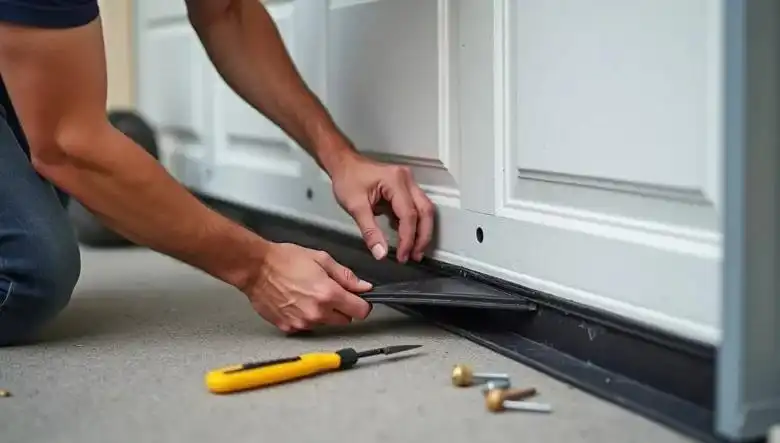
If the opener was operated while the door was frozen, the weather seal may have been stressed.
After the ice melts, look for visible damage along the accessible bottom edge.
A torn, partly detached, or severely deformed seal may need replacement.
A garage door opener can stop responding properly when the door encounters resistance.
Depending on the system, a technician may need to inspect the opener, trolley connection, drive components, or operating settings.
Do not repeatedly reset or operate the opener without understanding why the door isn't moving.
Garage door springs and lift cables help support and control the door's weight.
A broken spring, frayed cable, or displaced lifting component can prevent the door from operating normally.
If you notice a visible separation in a torsion spring, loose cables, or an uneven door, stop using the system.
Never attempt to wind, adjust, or replace springs or high-tension cables yourself.
Supreme Garage Door Repair provides professional garage door repair in Fort Worth, including inspection of springs, cables, openers, tracks, and related components.
Yes, attempting to operate a garage door while it's frozen to the ground can place abnormal resistance on the opener.
The system may be unable to lift the door because the bottom seal remains attached to the ice.
Continuing to activate the opener can place stress on the motor, drive system, trolley, and connected hardware.
However, that doesn't mean every frozen door causes opener damage.
If you stop operating the system promptly, the opener may not require repair.
The important thing is to avoid repeated attempts and have the system evaluated if it no longer operates correctly after thawing.
Some common attempts to free a frozen door can create additional damage.
Don't force the opener. Repeated attempts may strain the motor and connected components.
Don't pry the bottom panel upward. Using a crowbar, shovel, or similar tool can damage the weather seal, retainer, or lower door section.
Don't use an open flame or high-temperature heat source. These methods can damage materials and create fire or electrical hazards.
Don't pour boiling water around the opening. Rapid temperature changes may affect some materials, and water left behind can freeze again.
Don't disconnect springs, cables, or bottom brackets. These components may be under substantial tension.
Don't attempt to drive through a partially open door. If the door hasn't reached its fully open position, keep vehicles and people clear.
When a door appears unstable or remains stuck despite thawing, professional service is the appropriate next step.
A frozen garage door can be especially inconvenient when your vehicle is parked inside and you need to leave for work.
If the door cannot open safely, don't attempt to force it simply to remove the vehicle.
Use a separate pedestrian entrance if one is available.
If you cannot safely access the garage or the door appears damaged, explain the situation when contacting a technician.
If your garage door is stuck partly open, avoid walking beneath it and arrange an inspection because the problem may involve more than ice.
The priority is preventing injuries or additional damage, even when the situation disrupts your schedule.
Once the door is operating normally and any necessary repairs have been completed, a few targeted steps can reduce the chances of another freeze-related problem.
These measures focus specifically on moisture at the threshold rather than a full winter garage door maintenance routine.
After rain, check whether water regularly pools near the bottom of the garage door.
Remove accessible leaves and debris that may trap moisture.
If runoff consistently flows toward the garage, the driveway slope or drainage may need professional attention.
A seal that is cracked, flattened, or damaged may no longer make proper contact with the garage floor.
A technician can assess whether a compatible replacement seal is needed.
For more information about different seal materials and fitting requirements, read Supreme's garage door bottom weather seal guide.
If the garage floor has low spots, water may remain near the closed door.
A suitable threshold seal may help in some situations, but it won't correct every drainage or alignment problem.
Supreme's garage door weatherproofing guide explains the roles of weather seals, thresholds, and door alignment.
Some garage door manufacturers recommend specific products or treatments to reduce weather seal sticking.
Only use products approved for your particular door and weather seal material.
Avoid applying random lubricants, oils, or chemicals to the rubber because certain products may damage it.
For a broader seasonal inspection checklist covering rollers, springs, openers, and sensors, see our existing Fort Worth garage door winterization guide.
Not every frozen bottom seal requires professional repair.
If the problem resolves after safe thawing and the door operates normally, additional repair may not be necessary.
However, professional attention is recommended when:
A garage door technician can inspect the system and identify whether the problem involves the bottom seal, opener, lifting hardware, or another component.
A garage door that refuses to open after a freeze can leave your vehicle trapped, interrupt your day, or create a security concern.
Supreme Garage Door Repair provides residential garage door repair and inspection services throughout Fort Worth and nearby North Texas communities, including Arlington and surrounding areas.
Our technicians can assess stuck garage doors, damaged weather seals, malfunctioning openers, broken springs, cables, and other mechanical problems.
The goal is to identify what's preventing normal operation before recommending the appropriate repair.
If your garage door is frozen, damaged, or still not working after temperatures rise, contact our team to discuss the symptoms and schedule an inspection.
Yes. When moisture collects around the bottom weather seal and temperatures fall below freezing, ice can form between the seal and the concrete threshold. This may prevent the door from opening normally.
No. Repeatedly activating the opener can place additional resistance on the motor and related components. Stop operating the system and allow the ice to thaw safely.
Hot or boiling water is not recommended as a general solution. It can create additional water that may refreeze and can expose materials to rapid temperature changes. Avoid force or excessive heat, and contact a professional if the door cannot be freed safely.
It depends on the outdoor temperature, amount of ice, sunlight, wind, and conditions around the threshold. There is no reliable fixed time. Do not operate the door until the ice has released and the system appears safe.
The door may be frozen to the floor, but a broken spring, opener issue, or mechanical obstruction can cause similar symptoms. Stop operating the opener and arrange an inspection if the cause is unclear.
A correctly fitted bottom seal may improve protection, but it cannot eliminate every freezing risk. Water collecting around the threshold can still freeze. Drainage, seal condition, and proper door alignment all matter.
Do not pull the emergency release simply to force a frozen door open. If the door is damaged or unbalanced, disconnecting the opener may create additional risks. Follow the manufacturer's instructions and ask a professional when the door's condition is uncertain.
A garage door frozen to the ground can sometimes be resolved once the ice melts. But if the door remains stuck, the opener strains, or you notice damaged components, it's important to identify the actual problem before using the system again.
Supreme Garage Door Repair helps Fort Worth homeowners assess garage door problems and understand their repair options.
If your garage door won't open after a freeze, don't keep forcing it. Schedule a professional assessment.
Call (972) 619-7222 for Fort Worth service or schedule a garage door service appointment.
A professional inspection can help determine whether the issue involves frozen weatherstripping, a damaged opener, or another garage door component that needs attention.
