Commercial Garage Door Openers in Dallas, TX

In a warehouse, loading dock, firehouse, or parking garage, the opener is the “engine” that keeps operations flowing. Unlike residential units that lift a 150‑lb door a handful of times a day, commercial garage door openers are built for doors that weigh 300–1,200 lb and cycle hundreds of times per shift. Choosing the wrong operator can shorten equipment life, void a fire rating, or even halt production. Supreme Garage Door Repair supplies, installs, and services the full range of UL 325‑compliant commercial openers across the Dallas–Fort Worth metroplex.

Complete Services

Residential & Commercial Garage Door Solutions You Can Count On

Supreme Garage Door Repair helps homeowners and businesses improve security, functionality, and convenience through professional garage door and access system services.

Operator Types We Install

OperatorMountingBest ForKey Specs
Trolley (Model T, MT)Ceiling, center‑mounted railStandard sectional doors up to 14 ft high½–1 HP, 115–575 V, 90 cycles/hr
Jackshaft (Model J, LJ)Wall‑mount on torsion shaftHigh‑lift or limited headroom doors½–1 HP, logic board, chain or belt reduction
Hoist (Model H, GH)Wall‑mount with chain hoistRolling steel or fire doors up to 1000 lb1–2 HP, brake, fusible‑link release
Gearhead / Gear‑Reduced (Model GSD)Wall or shelfExtra‑large doors, continuous duty2–5 HP, oil‑bath gears, 60 cycles/hr continuous
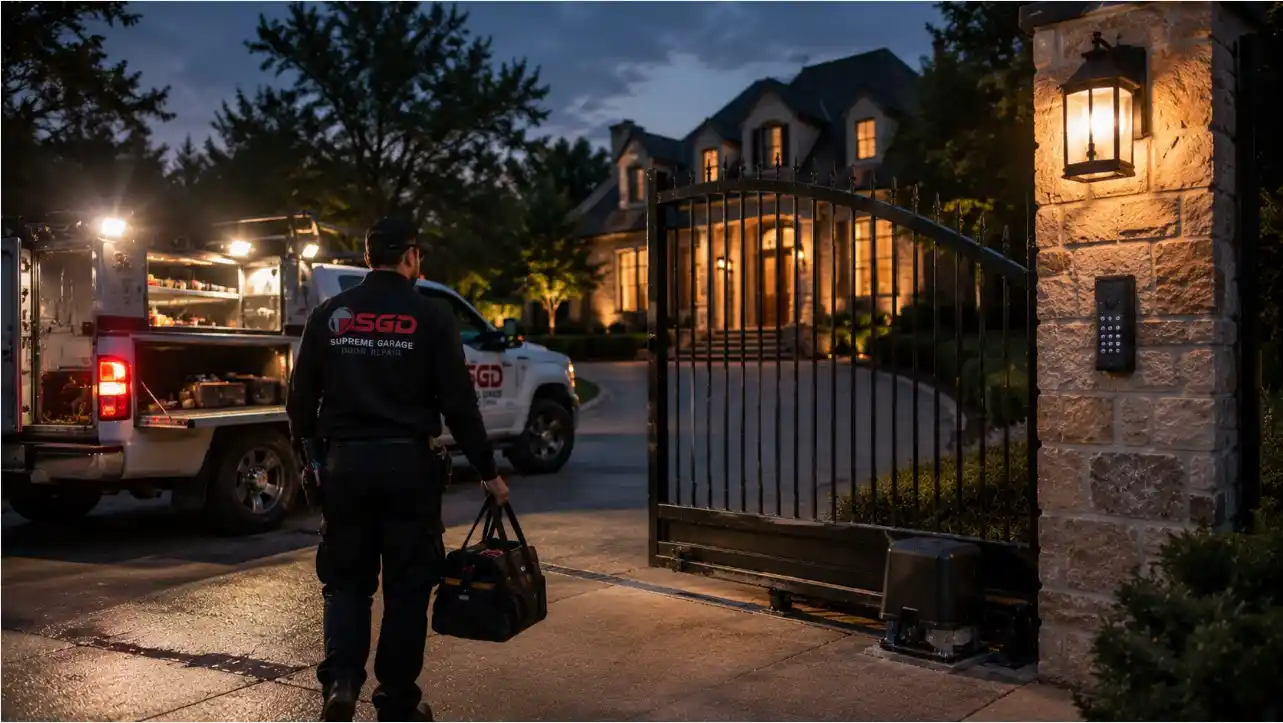
Slide Gate / BarrierTrack or cantilever gatesVehicle lots & docks½–2 HP, variable speed, battery backup

All operators we supply feature Logic 5.0 or equivalent smart controllers, timer‑to‑close, UL 325 monitored safety inputs, and optional MyQ® Facility or BBU (battery‑backup) modules.

Three anodized aluminum full view glass garage doors installed with commercial trolley operators in a modern facility in Dallas

Selecting the Right Commercial Opener

  1. Door Size & Weight – Measure width, height, curtain material, and verify counter‑balance.

  2. Duty Cycle – Estimate daily cycles; > 60 cycles/hr requires continuous‑duty motor and oil‑bath gearbox.

  3. Mounting Constraints – Check headroom, side room, and shaft diameter.

  4. Power & Controls – Confirm available voltage (120 V single‑phase to 575 V three‑phase) and desired access (key switch, keypad, loop detector, smart phone).

  5. Code & Fire Rating – Fire doors need a UL‑listed release device; parking structures may require NEMA 4 enclosures.

Our engineers perform a free on‑site assessment and provide a written specification so the opener you buy matches the door you have—and the business you run.

Commercial Garage Door Openers

Turn‑Key Installation Process

  1. Site Survey & Load Calculation

  2. Operator Sizing & Quotation

  3. Permitting & Electrical Coordination

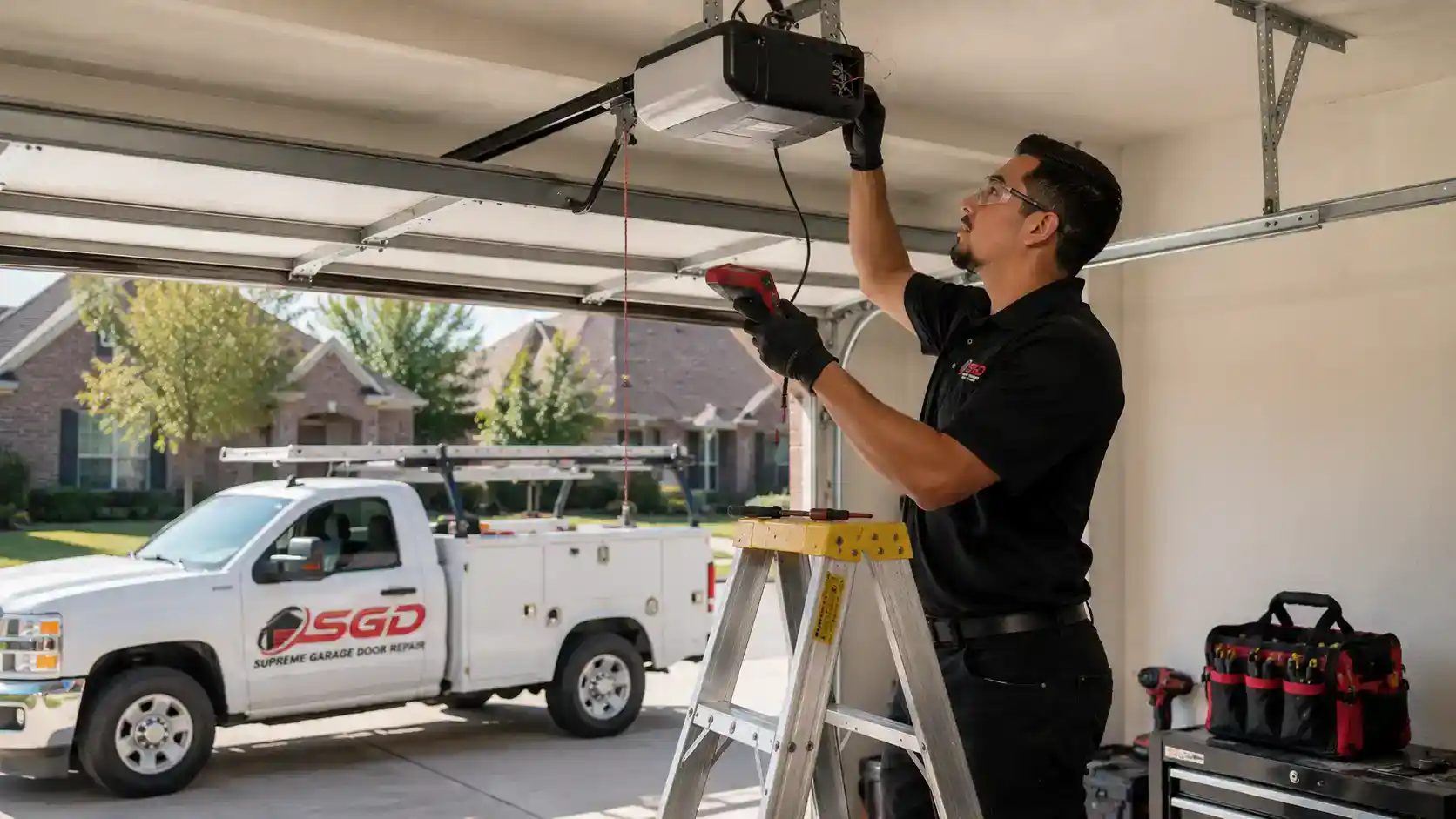
  4. Professional Installation – anchoring, wiring, limit‑setting, and safety‑device integration

  5. Start‑Up & Training – cycle test, photo‑eye check, timer‑to‑close programming, user instruction

  6. Planned Maintenance Enrollment – quarterly inspections, lubrication, and log‑book updates (required by OSHA for some facilities)

Typical install time: ½ day for trolley/jackshaft, 1 day for hoist or gearhead systems.

Reasons to Choose Us!
shield
High Quality Products
verified
Experienced and Professional Technicians
money bag
Competitive Pricing
time clock
Fast and Reliable Services
trophy
Highly Rated Company
headset
Available throughout the entire process
note
Warranties on All Products
medal
Licensed, Bonded and Insured

Repair & Maintenance

  • 24/7 emergency dispatch for motor burn‑outs, sheared keys, logic‑board faults, and limit failures

  • Stocked service vans carrying contactors, photo‑eyes, belts, and logic boards for LiftMaster®, Manaras‑Opera®, Genie PMX®, and more

  • Load‑test reports and door‑balance verification included after every repair

  • Annual maintenance contracts available; required to keep most manufacturer warranties valid

Commercial Garage Door Openers

Budgeting Guide (Installed)

Operator ClassTypical Cost*
½ HP trolley (sectional)$1,200 – $1,700
¾ HP jackshaft (high‑lift)$1,500 – $2,200
1 HP hoist (rolling steel)$2,200 – $3,200
2 HP gearhead (heavy steel)$3,500 – $5,000

*Includes operator, mounting hardware, controls, labor, start‑up, and one‑year labor warranty. Electrical supply or structural steel work priced separately.

Why Businesses Choose Supreme Garage Door Repair

  • Licensed, bonded, and insured commercial specialists

  • Factory‑trained on LiftMaster Logic 5.0, Manaras‑Opera, and Genie commercial lines

  • OSHA‑compliant lock‑out/tag‑out procedures

  • Detailed submittal drawings for GC & architect approval

  • Five‑year workmanship warranty on new installations

Book a Free On‑Site Consultation

Keep freight, fleet, and staff moving with the right opener. Call (972) 846‑9991 or email info@supremegaragedoortx.com to schedule your commercial garage‑door opener assessment anywhere in Dallas, Plano, Frisco, or Richardson.

Commercial Garage Door Openers - FAQ

High-cycle commercial garage door openers should be inspected and serviced every three months to help prevent unexpected breakdowns, motor strain, and safety issues. Lower-cycle commercial openers should be serviced at least once a year. A typical service visit includes lubrication, limit-switch testing, chain tension adjustment, door-balance verification, and safety-device testing.

Yes. Many commercial garage door openers manufactured after 2010 can be upgraded with a smart controller, Logic 5.0 control system, or compatible IoT kit. These upgrades can add Wi-Fi access, timer-to-close settings, remote monitoring, user permissions, and audit logs, making it easier to manage access for warehouses, loading docks, parking garages, and commercial facilities.

Many commercial opener systems include emergency operation options for power outages. Chain-hoist and gearhead operators typically include a manual release or hand-chain operation, while jackshaft and trolley openers may be upgraded with battery backup or a fail-safe chain hoist. These options help maintain emergency access, security, and safe egress when power is unavailable.

Commercial garage door openers may qualify as a business improvement or depreciable business property, depending on how the opener is used, owned, and placed in service. The IRS generally allows depreciation for qualifying business-use property, and some equipment or improvements may be eligible for Section 179 treatment. Because tax treatment depends on your business and installation details, ask your accountant or tax advisor before making a deduction claim.

The right commercial garage door opener depends on your door size, weight, clearance, cycle rate, mounting space, and power supply. Trolley operators are commonly used for standard sectional doors, jackshaft operators work well for high-lift or limited-headroom doors, hoist operators are ideal for rolling steel and fire doors, and gearhead operators are best for extra-large or continuous-duty commercial doors.

Yes. An undersized or incorrectly installed opener can strain the motor, damage gears, create limit problems, shorten equipment life, and cause unsafe operation. It may also void manufacturer warranties or create compliance issues for fire-rated or specialty door systems.

Yes. Supreme Garage Door Repair can replace outdated, underpowered, damaged, or non-compliant commercial garage door openers with a properly sized operator for your door system. The team will evaluate the door weight, counterbalance, duty cycle, voltage, mounting conditions, and safety requirements before recommending a replacement opener.

Commercial garage door opener installation costs vary based on the operator type, horsepower, controls, wiring, mounting hardware, and door requirements. In Dallas, a ½ HP trolley opener may cost around $1,200 to $1,700 installed, while jackshaft, hoist, and gearhead operators can range from about $1,500 to $5,000 or more depending on the system.

Supreme Garage Door Repair – powering Dallas businesses with reliable, code‑compliant commercial garage‑door openers.