 Skip to content


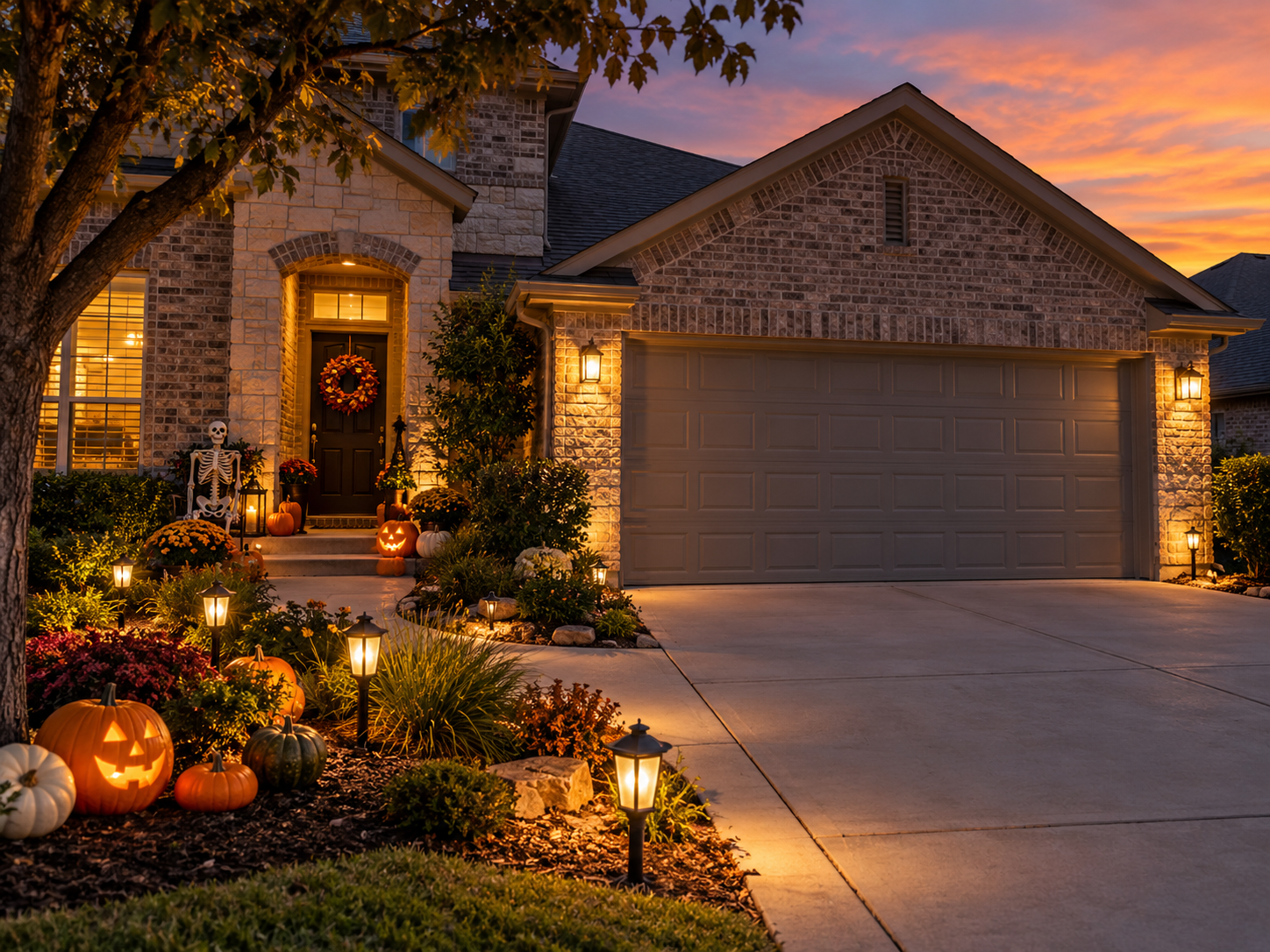
Halloween brings costumes, candy, decorations, and busy neighborhood streets to North Texas. From Dallas and Fort Worth to Frisco, Arlington, Garland, and surrounding communities, families are getting ready to welcome trick-or-treaters on October 31.
While decorating your porch and preparing treats, it's easy to overlook an important part of your property: the garage and driveway.
On Halloween evening, children may walk across driveways, guests may arrive in vehicles, and homeowners may open their garages more often than usual. Add costumes that limit visibility, outdoor decorations, and evening traffic, and the area around a garage deserves extra attention.
Halloween garage safety isn't just about whether your garage door works. It's also about keeping people, vehicles, and moving equipment safely separated.
This guide from Supreme Garage Door Repair explains how North Texas homeowners can prepare their garage doors, driveways, opener controls, and visitor entrances before Halloween night.
On a normal evening, your driveway may only be used by household members arriving or leaving home. Halloween can bring additional pedestrians, parked vehicles, guests, and neighborhood activity.
Children may be excited, distracted by decorations, or focused on reaching the next house. Some costumes can also make it harder to see approaching vehicles or obstacles.
The American Academy of Pediatrics recommends extra attention to pedestrian visibility, driveway crossings, and well-lit walking routes during Halloween.
Garage doors create a separate concern. They are heavy moving systems operated by motors, springs, cables, and other mechanical components. Safety sensors and automatic reversal features reduce certain risks, but they are not a substitute for keeping people away from a moving door.
For homeowners in Dallas, Fort Worth, Carrollton, Irving, and other North Texas communities, the safest approach is to prepare the garage area before visitors arrive.
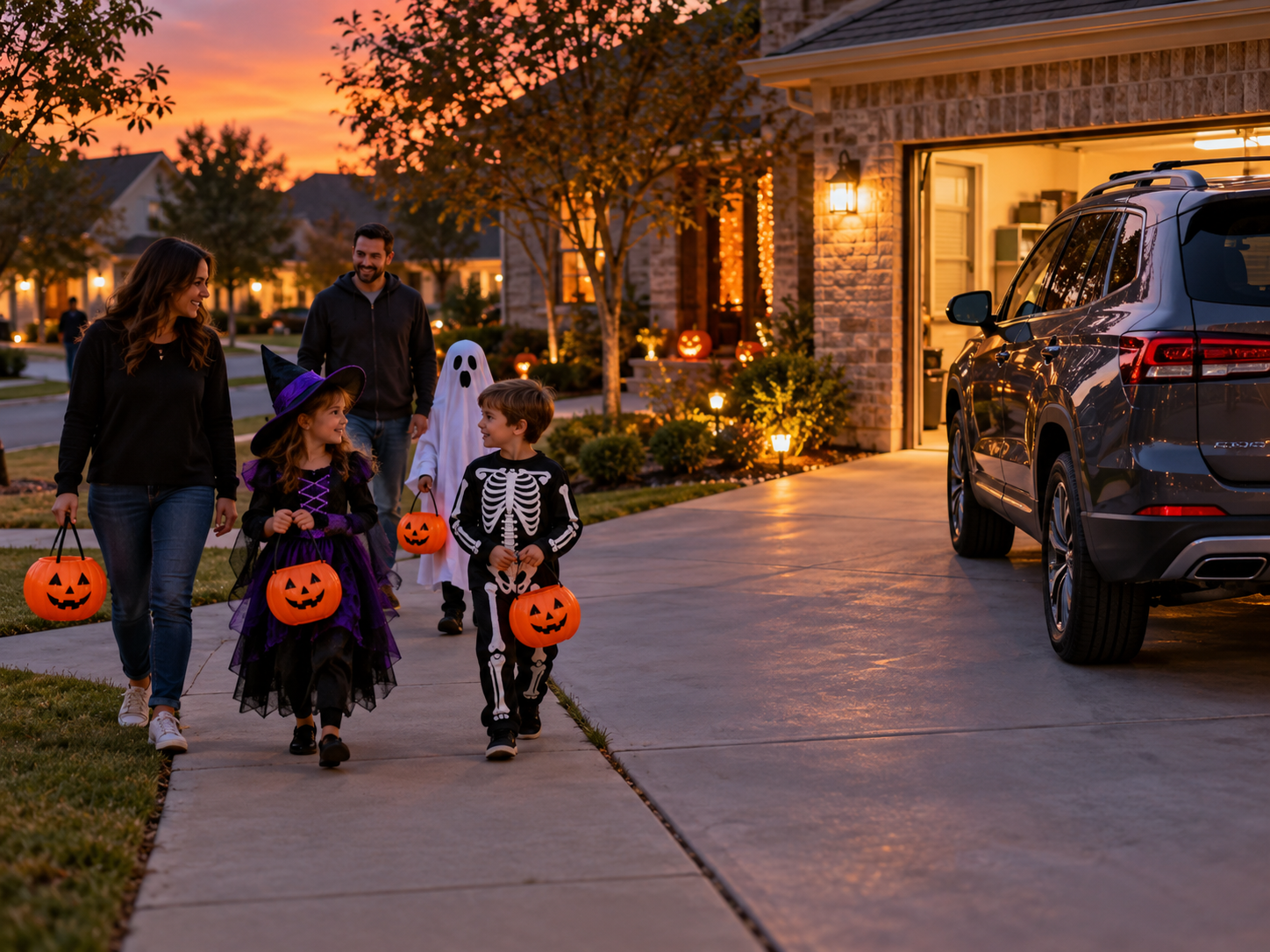
One of the biggest Halloween concerns is the interaction between pedestrians and vehicles.
Children may walk across driveways while moving between neighboring houses. Vehicles backing out of garages or entering properties can create dangerous situations, especially after dark.
Take a few minutes to inspect your driveway and surrounding pedestrian areas.
If you're hosting guests, consider keeping your driveway free of unnecessary vehicle movement during peak trick-or-treating activity.
When leaving a driveway, look carefully for children before moving. Check mirrors and cameras, but also turn and look around the vehicle.
Backup cameras can help with visibility, but they do not eliminate blind spots.
Move slowly, remain alert, and never assume that a child has noticed your vehicle.
For families with younger children, a designated pedestrian route away from parked cars and garage access points can make the evening easier to manage.
Halloween safety tip: Whenever practical, avoid backing vehicles out of the garage while groups of trick-or-treaters are nearby.
A garage door can be especially interesting to young children. They may enjoy pressing buttons, watching the door move, or trying to run underneath it before it closes.
These activities can be extremely dangerous.
Even garage doors with modern safety sensors must be treated as moving equipment.
Before Halloween activities begin, explain these rules to children:
Adults should also keep the moving door in sight until it closes completely.
Using the front walkway is usually a better choice when trick-or-treaters are visiting.
If the garage is part of your Halloween gathering, keep the garage door stationary while guests are in the area.
Avoid repeatedly opening and closing it as people arrive.
The U.S. Consumer Product Safety Commission (CPSC) recommends keeping garage door remote controls away from children and teaching them about the hazards of automatic garage doors.
These precautions are relevant throughout the year, but particularly useful when Halloween brings more activity around the garage.
A well-lit home is more welcoming to Halloween visitors and can help pedestrians recognize obstacles near driveways, steps, and entrances.
Outdoor lighting is especially important when decorations, parked vehicles, or landscaping features affect visibility.
Garage exterior lights
Make sure fixtures above or beside your garage are working properly.
Front walkways
Illuminate the path from the sidewalk to the main entrance.
Driveway edges
Check that visitors can distinguish the driveway from nearby landscaping, decorative displays, or changes in surface level.
Steps and entryways
Make sure guests can clearly see stairs, thresholds, and other changes in elevation.
Motion-activated lighting
Confirm that sensors activate as expected and provide enough light for approaching visitors.
Fog machines, flashing decorative lights, hanging props, and oversized displays may make the entrance harder to navigate.
Avoid positioning decorations where they obstruct exterior lights or hide the edge of the walkway.
Keep extension cords away from pedestrian routes, and use electrical products according to their outdoor-use ratings and manufacturer instructions.
For pumpkins and decorative lanterns near walking areas, battery-powered lights are preferable to exposed flames.
A festive entrance doesn't need to sacrifice visibility or safe access.
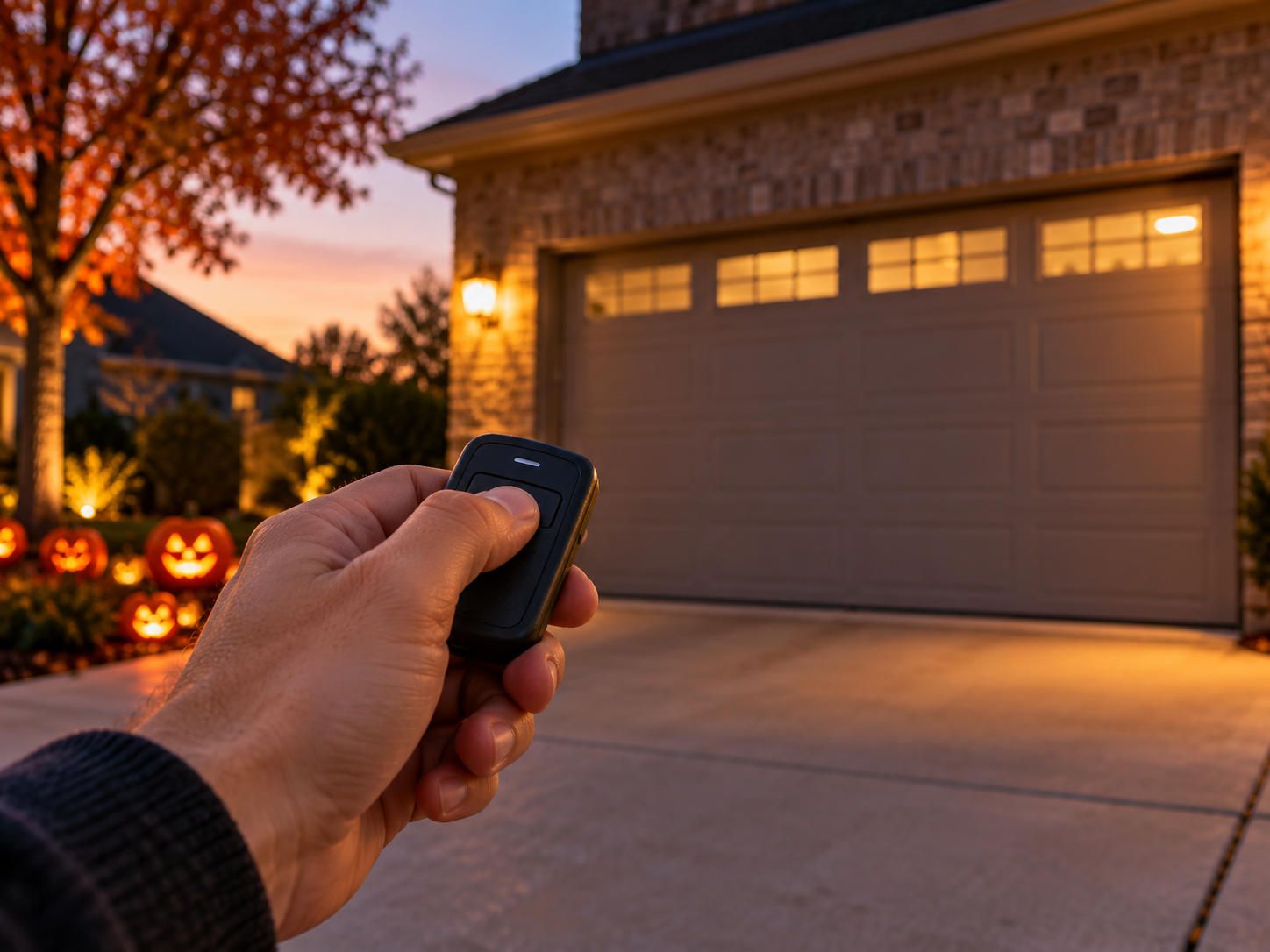
Many North Texas homes have multiple ways to access the garage.
Depending on the system, homeowners may use handheld remotes, vehicle-integrated controls, exterior keypads, smartphone applications, or smart-home automation.
These features are convenient, but it's important to review who can operate the garage door.
Halloween gatherings can mean more vehicles, visitors, and activity around your property.
1. Secure handheld remotes
Keep remote controls away from children and avoid leaving them inside unlocked vehicles.
2. Review keypad codes
If you've shared a garage access code with a visitor, contractor, or former household member, determine whether that access is still necessary.
3. Check smartphone permissions
If your opener supports shared access through an application, review the people or devices authorized to operate it.
4. Enable useful notifications
Some smart openers provide door-status alerts, activity notifications, and reminders when a door remains open.
Check your settings and confirm that notifications are functioning as intended.
5. Confirm the garage door is closed
Before leaving for trick-or-treating, make sure the door has fully closed rather than assuming a remote or smartphone command was completed successfully.
Some garage door systems support scheduled or unattended operation, depending on the model and settings.
Homeowners should understand how these features work and avoid activating the door when people are near the opening.
If your smart opener disconnects frequently, responds inconsistently, or reports unexpected activity, review the manufacturer's instructions and investigate the problem.
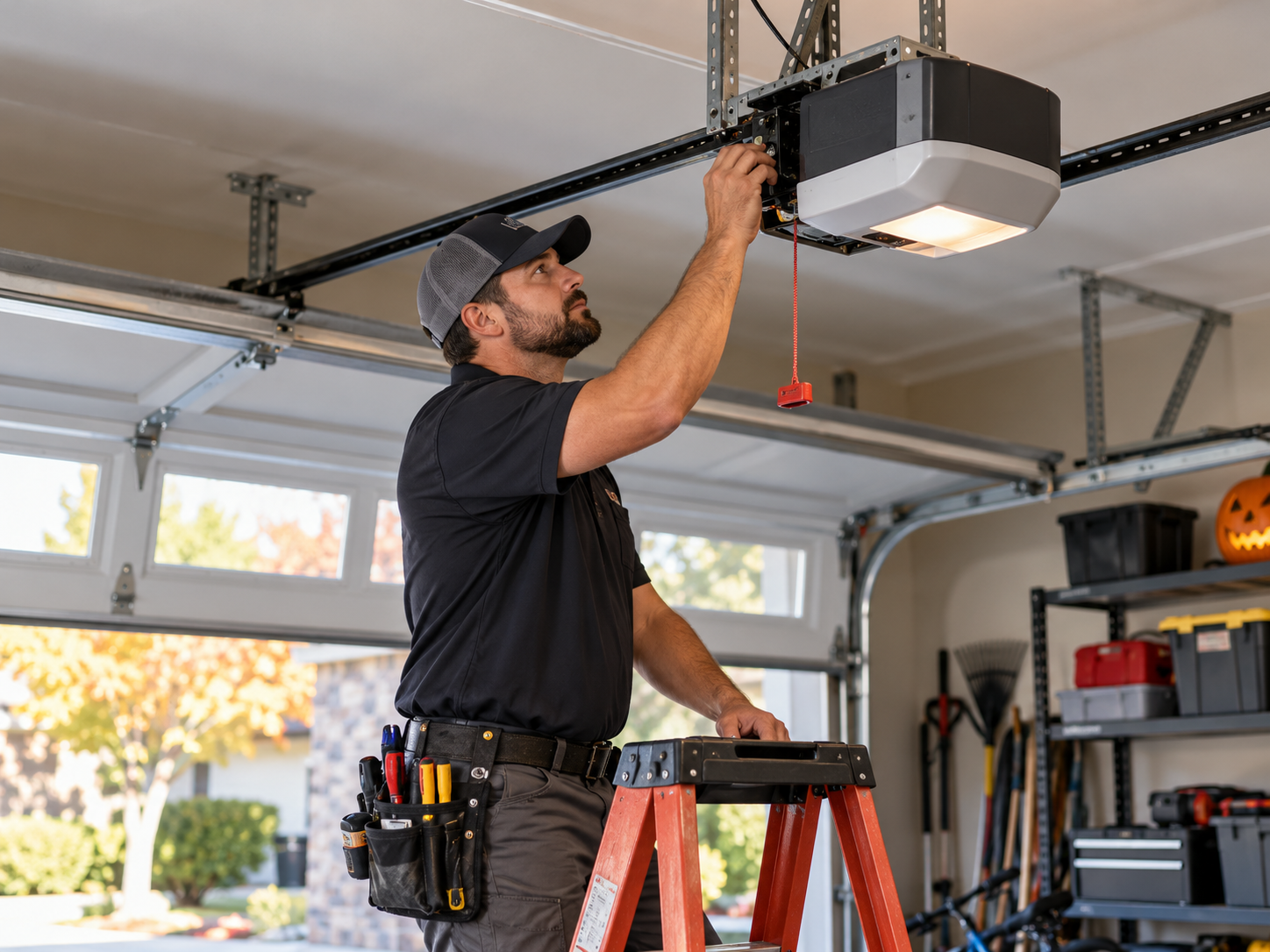
Supreme Garage Door Repair provides garage door opener repair for homeowners experiencing motor, remote, sensor, and control problems.
For additional guidance on managing opener access, see our garage door opener reset guide.
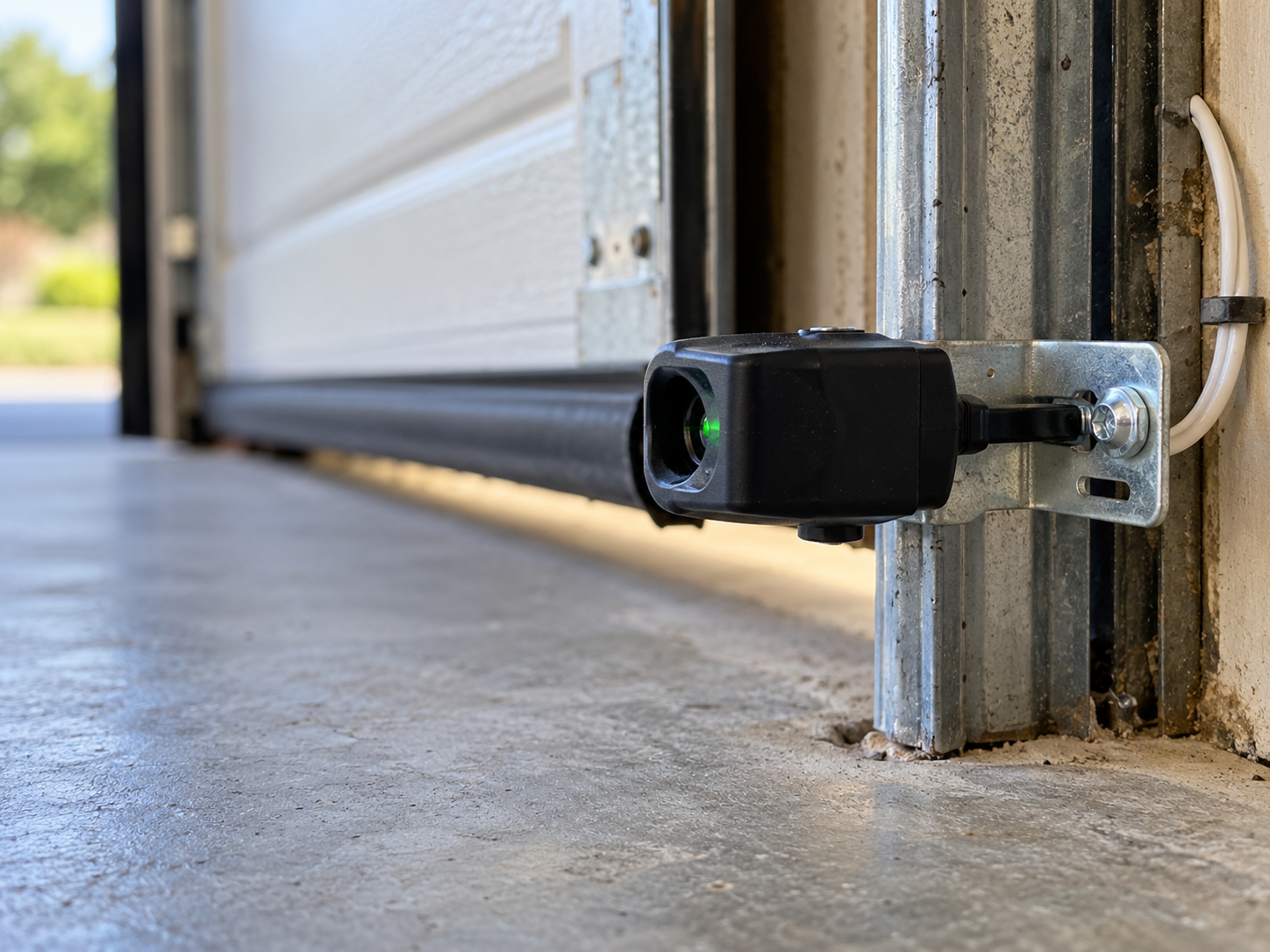
Garage door safety sensors help detect certain obstructions near the garage opening.
Most modern residential automatic garage door systems use photo-eye sensors positioned near the lower section of the doorway.
These sensors typically send an infrared beam between two devices. When the beam is interrupted while the door is closing, the opener should respond according to its safety design.
However, dirt, loose brackets, damaged wiring, or misplaced decorations can interfere with their operation.
Before Halloween:
Do not use people or pets to test the sensors or reversal features.
If your garage door stops closing or immediately reverses, first check whether an obvious object is blocking the doorway.
Do not force the door shut or bypass its safety sensors.
A malfunctioning opener, damaged wiring, or mechanical door problem may require professional inspection.
Our guide to garage door safety sensor warning lights explains common indicator-light behavior and troubleshooting considerations.
The CPSC recommends regular safety testing of automatic garage door openers, including monthly reversal testing in accordance with the manufacturer's instructions.
A garage door that fails an approved safety test should not continue operating automatically until the issue has been corrected.
For homeowners planning Halloween activities around their garage, safety features should be checked before visitors arrive rather than during a gathering.
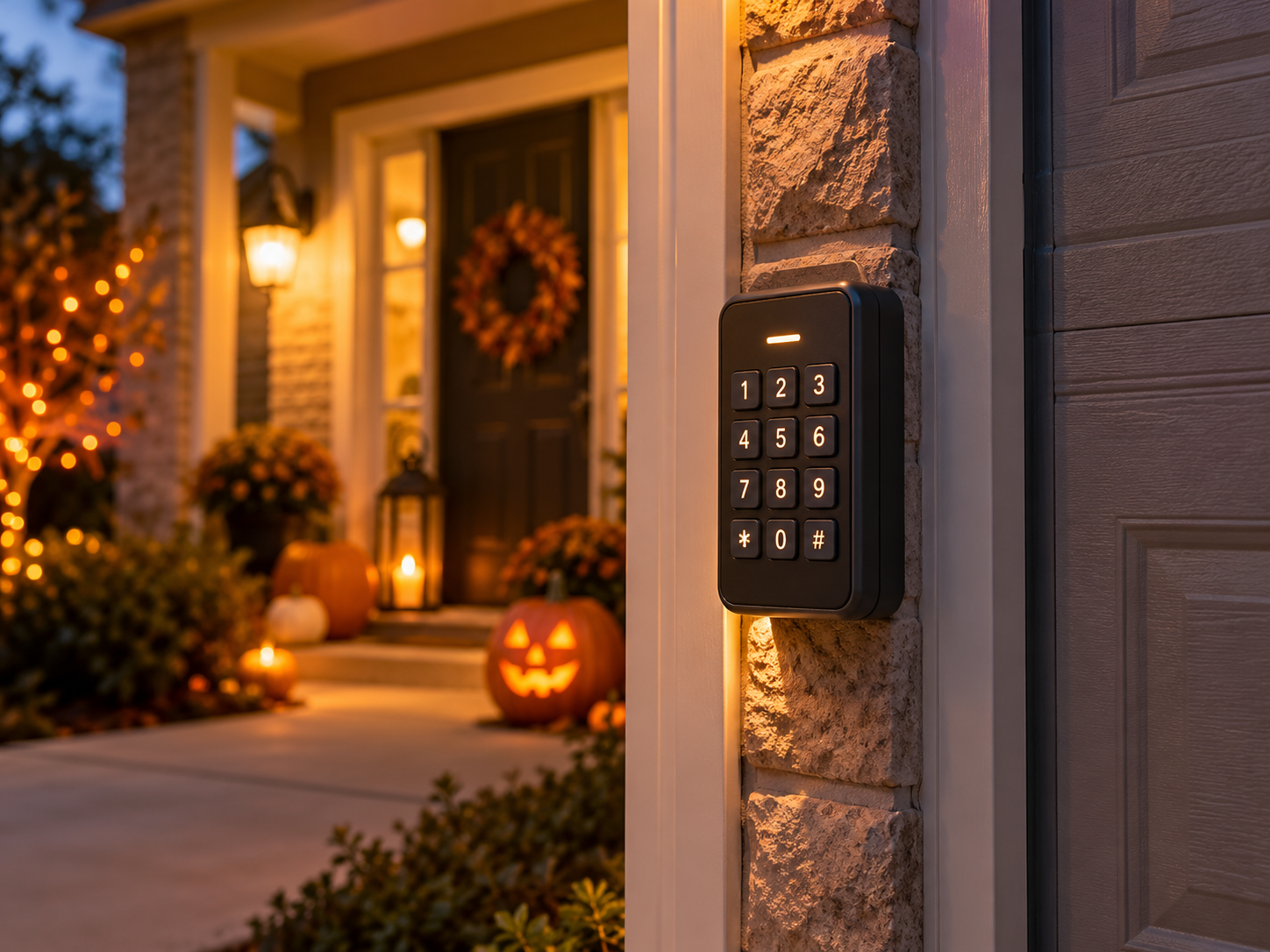
If you're hosting a Halloween party or expecting trick-or-treaters, consider how visitors will approach your home.
A well-planned entrance can help prevent people from walking into active garage door areas or through vehicle routes.
The front door is generally the simplest option for trick-or-treating.
If you're distributing candy from another location, make sure the route is clearly marked and separated from vehicles and moving garage doors.
Remove objects that could cause someone to trip or become distracted.
Common examples include:
Garages often contain equipment that isn't suitable for children to access.
Before hosting visitors, secure tools, cleaning products, chemicals, sharp objects, and other potentially hazardous materials.
If you're opening the garage for a gathering, prevent children from accessing mechanical components, stored equipment, and opener controls.
Some families use the garage for neighborhood gatherings or seasonal decorations.
If you plan to do this, keep the door stationary while people are nearby and avoid allowing guests to gather beneath it during operation.
Consider using the home entrance for arriving guests rather than frequently activating the garage door.
A successful Halloween gathering should have a clear separation between visitor areas and mechanical equipment.
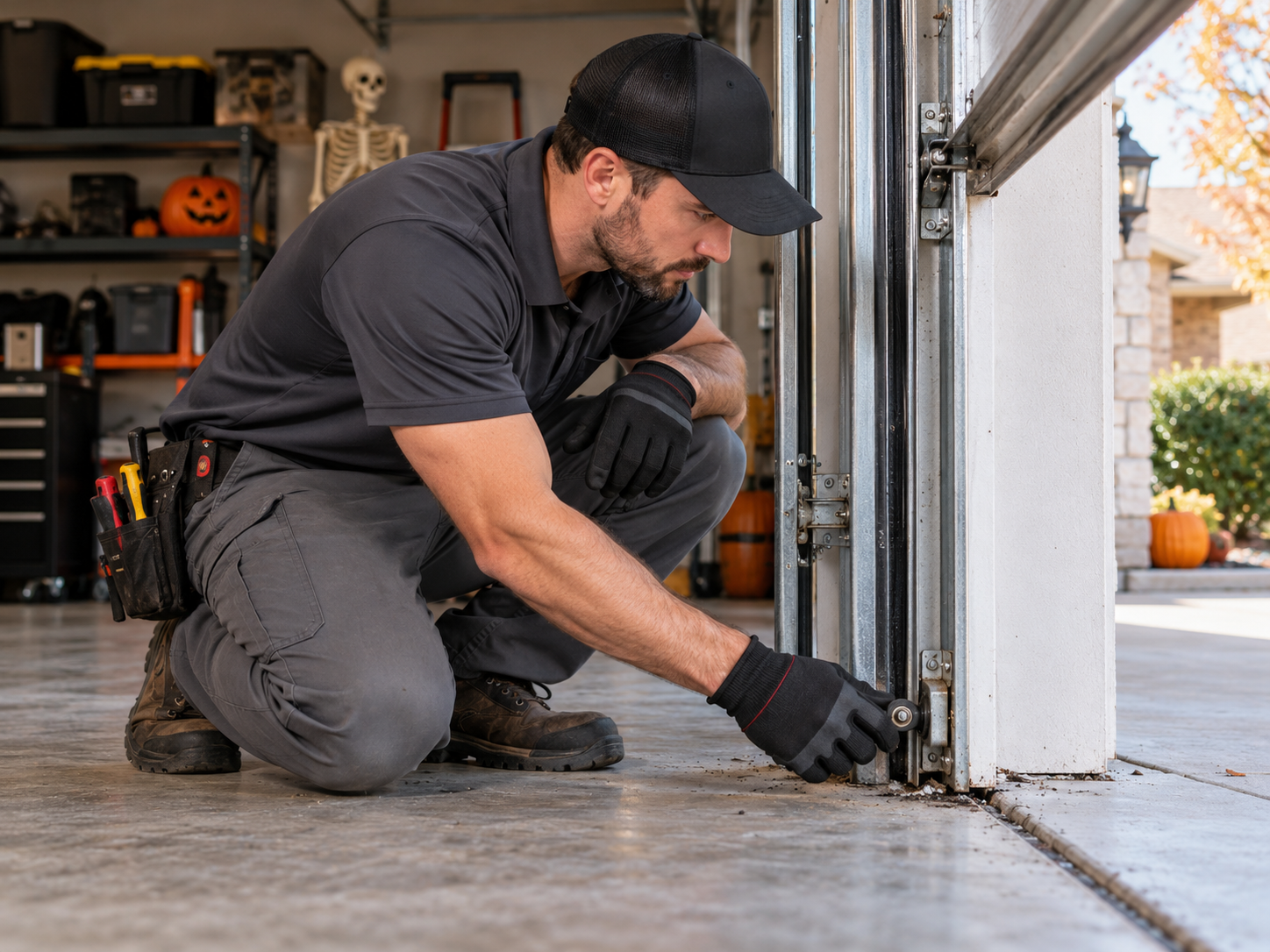
You don't need to perform a complete mechanical inspection yourself to identify obvious warning signs.
A visual check can help you recognize when professional service may be necessary.
Unusual grinding or scraping
These sounds may indicate worn rollers, damaged tracks, opener strain, or other mechanical problems.
A door that moves unevenly
A garage door that tilts or rises unevenly may have a problem involving its springs, cables, rollers, or tracks.
Repeated opener failures
An opener that intermittently stops responding may need troubleshooting.
Visible cable or spring damage
Frayed cables, loose components, or a visibly broken spring are reasons to stop operating the door.
Unexpected reversals
A garage door that reverses without an obvious obstruction may have a safety sensor, opener, or movement problem.
A door that won't close securely
An unsecured garage can create access and security concerns when your family is away.
Do not attempt to adjust or replace garage door springs, lift cables, cable drums, or other components under high tension.
These parts can cause serious injury when handled improperly.
Likewise, a garage door that has come off its tracks should not be forced back into position.
Supreme Garage Door Repair offers garage door services throughout North Texas, including opener repairs, spring and cable service, and related mechanical repairs.
For homeowners seeking preventive care, our garage door tune-up guide explains what a professional inspection may include.
Before October 31, use this checklist to review your property.
| Safety area | What to check |
|---|---|
| Driveway visibility | Children and pedestrians are visible before vehicles move |
| Garage door movement | No unusual noises, tilting, sticking, or unpredictable operation |
| Children and pets | Kept away from moving doors and opener controls |
| Safety sensors | Clear of objects and functioning according to manufacturer instructions |
| Garage lighting | Exterior lights illuminate the driveway and pedestrian routes |
| Smart access | Remotes, keypad codes, and app permissions are secure |
| Decorations | Clear of tracks, hinges, sensors, and moving components |
| Visitor entrance | Walkway is illuminated and free of trip hazards |
| Vehicle movement | Drivers check carefully for pedestrians before entering or exiting |
| Garage security | Door is fully closed and property access is secured |
This checklist is intended for basic homeowner observations. It does not replace professional diagnosis of a damaged or malfunctioning garage door.
Leaving the garage open isn't automatically unsafe, but it can expose tools, stored items, and mechanical equipment to children and visitors.
If you're hosting an event in the garage, keep the door stationary while people are nearby and prevent access to opener controls and hazardous equipment.
Using the front entrance is generally a simpler option for trick-or-treaters.
Yes. Decorations, extension cords, storage items, or other objects near the garage opening may interrupt the photo-eye beam or interfere with moving components.
Keep decorations away from sensors, tracks, hinges, and the door's travel path.
If your opener has automatic or scheduled closing features, review the manufacturer's instructions and settings before hosting visitors.
Avoid unattended operation when people may be gathering around the garage opening. Consider temporarily disabling automatic closing during the event if your equipment supports that option.
Keep children away from vehicle routes and active garage doors.
Before entering or exiting the driveway, check carefully for pedestrians and wait until the area is clear.
Follow the manufacturer's recommended testing procedure for your specific opener.
Indicator lights alone may not confirm full safety-system performance.
If the system doesn't respond correctly, stop automatic operation and arrange professional service.
Smart controls may provide useful features such as activity alerts, door-status monitoring, shared access permissions, and remote operation.
However, these features must be configured appropriately. They do not replace physical garage security or functioning mechanical safety systems.
A professional inspection is not required simply because Halloween is approaching.
However, if your garage door makes unusual noises, has visible damage, operates unpredictably, or fails a safety test, addressing the problem before a busy gathering is advisable.
Halloween is a good reminder that a garage door is more than a convenient entrance. It is part of your home's daily access, vehicle movement, and security.
Keeping the driveway visible, controlling garage access, supervising children, and checking the door's safety features can help homeowners prepare for a busy Halloween evening.
Supreme Garage Door Repair provides professional garage door repair, opener troubleshooting, spring and cable service, and maintenance for residential and commercial properties throughout North Texas.
Our service areas include Dallas, Fort Worth, Arlington, Carrollton, Irving, Frisco, Denton, and surrounding communities.
If your garage door isn't operating correctly, our technicians can inspect the system, explain the problem, and recommend the appropriate repair or maintenance service.
Before welcoming visitors on October 31, take a few minutes to review your driveway, garage access controls, and garage door operation.
If you notice an issue that requires professional attention, contact Supreme Garage Door Repair to arrange a service appointment.
Schedule ServiceSafety note: This article provides general safety information. Always follow your garage door opener manufacturer's instructions. Never attempt to repair or adjust garage door springs, lift cables, or other high-tension components without appropriate professional training.
