 Skip to content


Garage door cables help a heavy door move safely and evenly. When a cable becomes frayed, loose, rusted, stretched, or broken, the door may tilt, bind, or stop moving. If you need to repair cables, it is important to check more than the visible wire. The springs, drums, tracks, rollers, and door balance all work together.
Supreme Garage Door Repair helps with garage door cables. They serve Dallas-Fort Worth and all of North Texas. Our technicians inspect the complete lifting system before recommending repair or replacement.
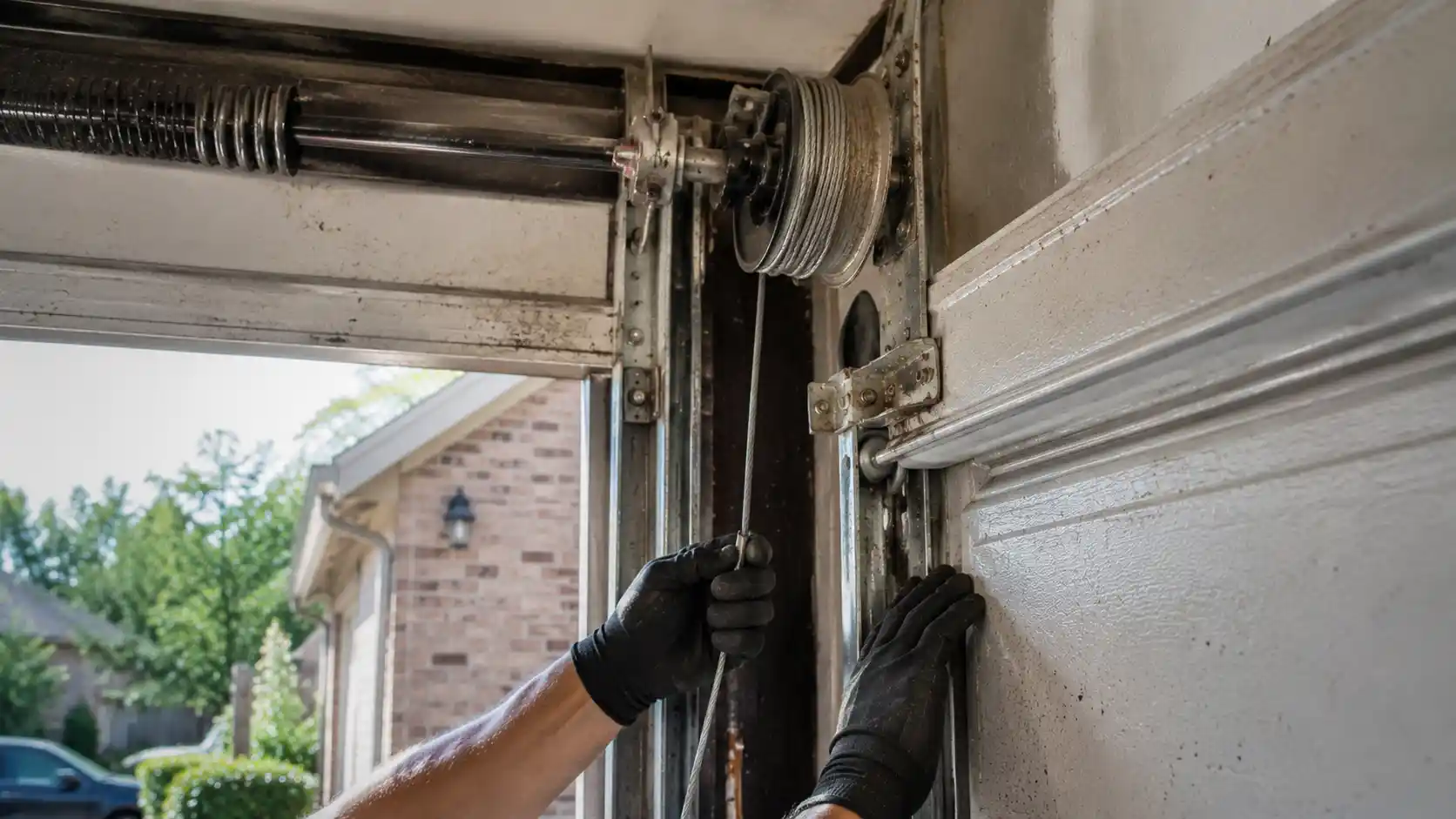
Garage door cables work with the spring system to lift and lower the door.
The springs help balance the weight of the garage door. The cables transfer that lifting force so both sides of the door can move together.
A properly working cable system helps the door:
Supreme's garage door repair service inspects cables. It also checks other parts that control safe door movement.
Cable problems can start small and become serious quickly.
A few broken strands may turn into a fully snapped cable. A loose cable may come off the drum. A damaged spring or uneven door can also cause the cable to move incorrectly.
Warning signs include:
If you notice these signs, avoid repeatedly operating the door.
Supreme provides expert help with garage door cable replacement. We fix damaged, loose, frayed, or broken cables.
Garage door cables handle repeated stress every time the door opens and closes.
Several conditions can shorten their service life.
Cable strands can slowly weaken after years of regular door movement.
The damage may begin with only one or two visible strands before becoming more serious.
Moisture and changing garage conditions can affect metal components.
Rust can weaken individual cable strands and make the cable less dependable.
The springs and cables are part of the same lifting system.
A weak, broken, or poorly balanced spring can change how force is distributed through the door.
Supreme provides expert garage door spring service. This service helps if your springs cause lifting or balance problems.
On torsion systems, the cable winds around a drum.
If the drum is damaged, loose, or not operating correctly, the cable may no longer track properly.
A crooked door can put uneven stress on the cable system.
Inspect bent tracks, damaged rollers, or any alignment issues. Also check the cables.
A badly frayed cable normally should not be patched.
Garage door lift cables contain multiple steel strands. When those strands begin breaking, the cable has already lost some of its strength.
Tape, knots, clamps, or other temporary fixes do not return the cable to its original condition.
When technicians repair cables, replacing the damaged cable is often the proper solution.
The technician should also determine why the cable became damaged. Replacing a cable without correcting the cause can allow the same problem to return.
Not every cable problem looks the same.
A cable can sometimes come off the drum even when the cable itself has not snapped.
Possible causes include:
The cause should be diagnosed before the door returns to normal use.
A cable with broken strands is showing physical wear.
Continued operation may allow the remaining strands to weaken.
A snapped cable can leave one side of the garage door unsupported.
The door may become crooked, jam in the tracks, or refuse to move.
A broken cable can immediately affect the balance of the door.
You may notice:
Do not keep pressing the opener button if the door becomes crooked.
The opener is designed to move a properly balanced garage door. It should not be expected to overcome a damaged lifting system.
It is better to stop operating the door until it has been inspected.
Even if the door still moves, the two sides may no longer have equal support.
The remaining cable can carry an uneven load, and the door may bind or move unpredictably.
Using the system can also impact the tracks, rollers, opener, drums, and other parts.
Garage door cables work closely with springs and other parts. These parts can stay under a lot of tension.
Fixing cables without training is risky. You could encounter high-tension parts and a heavy door.
Homeowners should not attempt to:
Safe homeowner checks should stay visual.
You can look for fraying, rust, looseness, uneven movement, or a cable that has moved out of position. The tensioned repair work should be left to a trained technician.
The lower cable attachment may look like ordinary garage door hardware.
It is not.
On many garage doors, the lifting cable connects to the bottom fixture. That component can remain under spring tension even when the door is closed.
Removing or loosening it can release force unexpectedly.
So, bottom brackets linked to lifting cables aren't regular DIY hardware.

Professional cable work starts with diagnosis.
The visible cable may be only one part of the problem.
The technician checks both sides for:
The door's springs need to support the correct amount of weight.
A cable replacement will not solve a spring problem.
The cable must wind neatly around the drum. It shouldn't jump grooves or get tangled.
If the door tilted when the cable failed, connected parts may also need inspection.
After the cable work is complete, the garage door should move smoothly and evenly.
The technician can check balance and system movement before normal operation resumes.
Homeowners can check Supreme's garage door parts diagram. It shows how cables fit into the system.
The answer depends on the condition of the system.
Garage door cables on both sides usually experience similar use.
If one cable fails due to age or wear, the second cable might also be worn out.
A technician should check both cables. They will then recommend if one or both need replacing.
The decision should be based on:
Yes.
A garage door opener works best when the door is properly balanced.
When a cable breaks, the door may become heavier on one side or difficult to move.
The opener may then:
Repeated operation may add unnecessary strain to the opener system.
Fix the lifting problem first. This stops the opener from making up for a mechanical failure.
A cable that repeatedly leaves the drum usually points to another issue.
Possible causes include:
Putting the cable back on the drum without finding the cause won't fix the problem for long.
The full lifting system needs to be inspected.
You do not need to adjust the cables to monitor their condition.
A visual check can help you notice problems before complete failure.
Look for:
Do not touch or adjust a damaged cable if the system may still be under tension.
Routine inspection helps garage doors that open and close many times a day.
Garage door parts in North Texas face heat, storms, moisture, dust, and daily wear.
These conditions don't automatically make a cable fail. However, they can lead to wear in the garage door system.
Check the door balance and look for wear on metal parts. This can help spot issues early.
Always inspect the cables along with the springs, tracks, rollers, and other hardware.

Supreme Garage Door Repair provides cable repair and replacement throughout North Texas.
Our technicians check the lifting system. They look to see if the problem is with the cable or another part.
This is especially important when the garage door is:
Homeowners in Carrollton can learn more about garage door repair in Carrollton, TX.
Look for frayed strands, rust, loose cable, uneven movement, or a cable hanging near the track.
A crooked garage door can mean there's a problem with the cable or lifting system.
Continued use is not recommended.
A frayed cable has already lost some of its steel strands. Additional movement can increase wear and may lead to complete failure.
Stop operating the garage door and arrange professional inspection.
Do not repeatedly use the opener or try to straighten a crooked door. The remaining cable and other lifting components may be under uneven load.
Possible causes are:
A technician should identify the cause before returning the door to normal use.
Garage door cables work with spring-loaded components that can be under significant tension.
Homeowners should not loosen cable drums, springs, or cable-connected bottom brackets. Professional repair is the safer option.
It depends on their condition.
If both cables are the same age and one has failed from normal wear, the second cable might also be worn out. Both should be inspected before deciding.
Yes.
A damaged cable can cause the door to move unevenly or become difficult to lift. That can place extra strain on the opener if it continues operating.
There is no single replacement schedule that fits every garage door.
Usage, environment, door weight, spring condition, and cable type all affect wear. Visual checks and routine professional inspections can help find damage early.
Garage door cables are essential to safe and balanced door movement.
A loose, frayed, or broken cable can cause the door to tilt, bind, or place extra strain on other components.
To repair cables, check the entire lifting system. Springs, drums, tracks, rollers, and door balance can all affect cable performance.
Fixing the cause helps your garage door work better. Don’t just fix the visible damage. This way, it lasts longer and is more reliable.
If you need to repair cables because your garage door is crooked, a cable is frayed, or one has snapped, Supreme Garage Door Repair can inspect the system and explain the appropriate repair.
Contact Supreme Garage Door Repair to schedule professional garage door cable service throughout Dallas-Fort Worth and North Texas.
Schedule Garage Door Cable Service