 Skip to content


Garage door insulation matters because it slows heat transfer through the door and can improve comfort, particularly in attached garages or spaces used as workshops and gyms. Its effectiveness depends on the door’s construction, air seals, surrounding insulation and any heating or cooling equipment.
Supreme Garage Door Repair and The Right Choice Heating and Air collaborate on garage projects that involve both door improvements and climate control. The approach is to assess the space as a whole, then identify which upgrades suit the homeowner’s intended use.
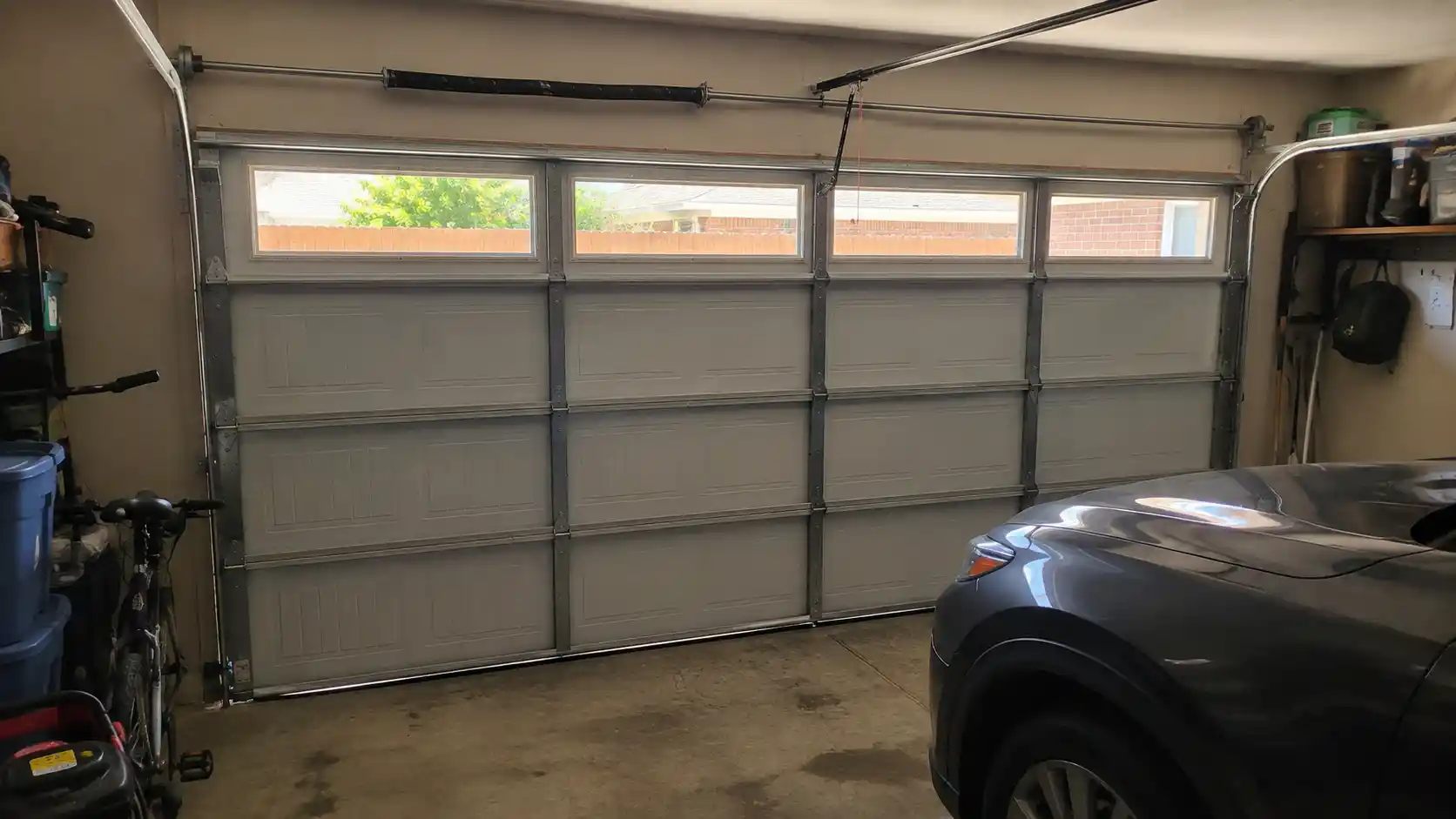
Garage door insulation is a material within or attached to the panels that resists heat flow. It slows heat gain and heat loss rather than creating a fixed indoor temperature or actively heating and cooling the garage.
Manufacturers offer different panel constructions, including insulated steel doors. Compare the complete product specifications because insulation material, panel thickness, seals and installation all affect the result.
Polystyrene is commonly used as rigid foam panels, while polyurethane is typically injected into the panel cavity. Compare insulation thickness, published thermal ratings, construction and warranty terms rather than choosing on material name alone.
R-value describes thermal resistance: a higher value indicates greater resistance to heat flow for the component being rated. Check whether the quoted rating applies to a panel section or the complete door, and compare ratings measured on the same basis. For additional context, consult Clopay’s guide to choosing an insulated garage door.
An insulated door addresses only one part of the garage. Gaps around the door, uninsulated walls or ceilings and frequent door opening can still affect indoor conditions.
For a new door, review garage door installation options alongside the insulation specifications. If the existing door is unsuitable for an upgrade, compare garage door replacement services before buying a retrofit kit.
A garage used regularly for hobbies or exercise may need active heating or cooling to meet the desired temperature. Insulation and air sealing can support that system, but equipment selection should follow an assessment of the space and its intended use.
A ductless mini-split may be an option for a space without ductwork, as described in ENERGY STAR’s guide to ductless heating and cooling. Suitability depends on the heating and cooling load, installation requirements and operating needs.
Temperature control and ventilation serve different purposes. A heating or cooling unit does not automatically provide fresh-air ventilation or prevent garage pollutants from reaching adjacent rooms. Ask the HVAC professional to assess ventilation and separation from living areas as part of the project.
The EPA’s introduction to indoor air quality explains why pollutant sources and ventilation both matter. Evaluate these issues separately from whether the garage feels comfortable.
A garage-door professional should assess door compatibility, seals, hardware and balance. An HVAC professional should evaluate heating and cooling requirements, equipment options and ventilation needs when conditioning the space is part of the plan.
Ask each provider for a written scope, relevant experience, evidence of insurance and clear warranty terms. Confirm who is responsible for any added door weight, balance adjustments and coordination between the door and HVAC work.
In this collaboration, Supreme Garage Door Repair addresses the garage-door portion of the project, while The Right Choice Heating and Air’s HVAC team addresses heating and cooling needs. Homeowners should confirm the proposed work and responsibilities with each provider before proceeding.
An insulated door can improve the garage’s thermal performance, but the results vary by home. It is best evaluated as part of the complete enclosure rather than as a guarantee of comfort or energy savings.
Start with your intended use and the current condition of the door, seals and surrounding construction. Ask for model-specific insulation ratings, a compatibility assessment and an itemized quote before choosing a retrofit or replacement.
If heating or cooling is needed, include equipment sizing and ventilation in the plan. Compare upfront costs, expected operation and warranty coverage rather than relying on a promised temperature or energy saving.
No. Insulation slows heat transfer; it does not actively heat or cool the space. A garage used regularly as a gym or workshop may also need properly sized conditioning equipment, depending on the desired temperature and overall construction.
It may help, especially when the garage adjoins conditioned rooms, but savings are not guaranteed. Results depend on the door, air sealing, surrounding insulation, climate and HVAC use; conditioning a previously unconditioned garage adds an energy load.
A ductless mini-split may be an option, but no single system fits every garage. An HVAC professional should assess the heating and cooling load, intended use and ventilation needs; separate equipment alone does not guarantee that garage fumes will stay out of living areas.
Polystyrene is commonly supplied as rigid foam panels, while polyurethane is typically injected into the door panel cavity. Compare the actual door models, thicknesses, published thermal ratings and construction rather than assuming that the material name alone determines performance.
Some doors accept compatible retrofit kits, but added weight can affect balance and opener operation. Have a garage-door professional confirm suitability before installation and assess the completed door; any spring adjustment should be performed by a trained technician.
Insulated panels reduce heat transfer through the door, while perimeter seals help limit air leakage around it. Worn seals or gaps should be assessed alongside panel insulation because either issue can affect comfort.
Some insulated door constructions can reduce sound transmission or operating noise compared with some uninsulated doors. Results depend on the complete door, seals and hardware condition; insulation is not a soundproofing guarantee.
It may moderate temperature changes, but it cannot guarantee safe storage temperatures. Follow each item’s storage requirements and monitor actual garage conditions; temperature-sensitive belongings may need a conditioned indoor location.
Contact Supreme Garage Door Repair to discuss insulated garage doors, weather sealing, and professional installation options. If you also plan to heat or cool your garage, consult The Right Choice Heating and Air to assess your heating, cooling, and ventilation needs.
Request Spring Service