 Skip to content


Why Spring Repairs Should Be Handled By Professionals
If you need to fix a garage door spring, professional repair is the safer choice. Garage door springs operate under significant tension and help counterbalance the weight of the door. Incorrect handling can cause the spring, cables, door, or related hardware to move unexpectedly.
Spring repair also involves more than replacing one visible component. The correct spring must match the door, tension must be set properly, and the entire lifting system should be checked after the repair.
For Dallas-Fort Worth homeowners, understanding what springs do and why professional service matters can help prevent unsafe DIY repairs and additional garage door damage.
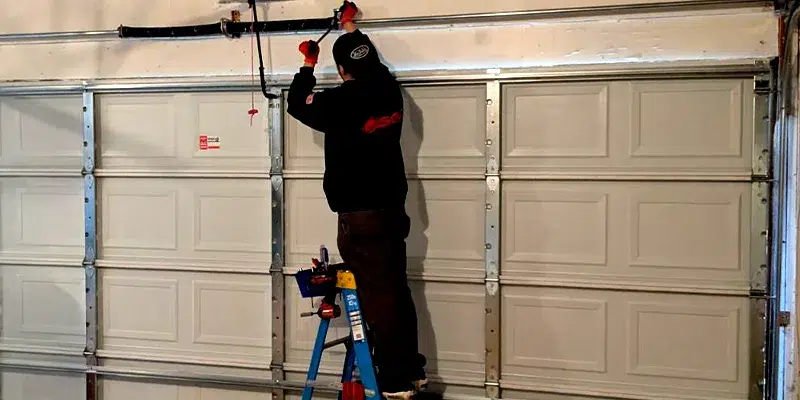
Why Is It Dangerous to Fix a Garage Door Spring Yourself?
Quick answer: Garage door springs store mechanical energy under significant tension. Removing, winding, unwinding, adjusting, or replacing a spring without the correct tools and training can cause uncontrolled movement of the spring, cables, hardware, or door.
Garage door springs store mechanical energy so a heavy garage door can open and close with much less effort.
That stored energy is what makes spring repairs different from basic maintenance tasks.
Torsion springs are mounted on a shaft above many garage doors. Extension springs stretch along the sides of some systems. Both types are designed to support substantial loads during normal operation.
Attempting to remove, wind, unwind, adjust, or replace these springs without the correct tools and training can cause uncontrolled movement.
Professional spring service is designed to control that tension throughout the repair process.
Safety note: Supreme Garage Door Repair advises homeowners not to tension or repair broken springs themselves. Springs, cables, drums, hardware, and door balance should be inspected before deciding on the appropriate repair.
A Garage Door Spring Does More Than Help the Door Open
The spring system helps balance the weight of the garage door.
When the springs are correctly matched and adjusted, the door should move in a controlled manner without forcing the opener to carry the full weight.
A weak, damaged, incorrectly sized, or broken spring changes that balance.
You may notice:
Loss of spring assistance can make the garage door much harder to lift or control.
A failed or weak spring can prevent the lifting system from moving the door through its full travel.
One side moving differently from the other can indicate a lifting-system or cable problem.
The opener may work harder when the spring is no longer properly supporting the door.
A separated section in a torsion spring can be a visible sign that the spring has broken.
Spring failure can affect cable position and the overall lifting system.
These symptoms should be treated as signs that the entire lifting system needs inspection rather than as instructions to adjust the spring yourself.
For spring-specific service, Supreme provides professional garage door spring repair and replacement throughout North Texas.
Correct Spring Sizing Requires More Than Matching Appearance
Garage door springs are not interchangeable simply because they look similar.
The correct spring depends on the door's weight, dimensions, configuration, spring system, and related hardware.
Installing an incorrectly sized spring can leave the door poorly balanced.
A spring that does not provide enough lifting force may leave the opener working harder than intended. A spring that provides too much force can also affect how the door moves and closes.
Supreme's current spring service process includes selecting springs based on the garage door's weight and configuration, then balancing and testing the system after installation.
That is one reason purchasing a spring based only on length or appearance can lead to problems.

Spring Tension Has to Be Set Correctly
Replacing the spring itself is only part of the repair.
The spring must also be correctly tensioned so it counterbalances the door without causing poor movement.
Too little or too much spring force can affect:
- Door balance
- Cable operation
- Opener workload
- Closing movement
- Overall system performance
Professional technicians use controlled procedures and appropriate tools to set spring tension while checking how the complete door responds.
After spring service, the door should also be tested for balance before relying on the opener for normal operation.
Important: Spring tension is not an area where trial-and-error adjustment is appropriate.
Broken Springs Can Affect Other Garage Door Components
A broken spring often affects more than one part of the door.
When the lifting system loses spring support, the opener may struggle to move the door. Cables may become loose or shift. The door can also become uneven or difficult to control.
Supreme recommends inspecting related components such as cables, drums, bearings, brackets, rollers, tracks, and opener operation during spring service.
This complete inspection matters because replacing a spring without identifying related damage can leave another problem unresolved.
Stop using the door if it is already crooked, unstable, or off track. Repeatedly activating the opener can place more strain on the damaged system.
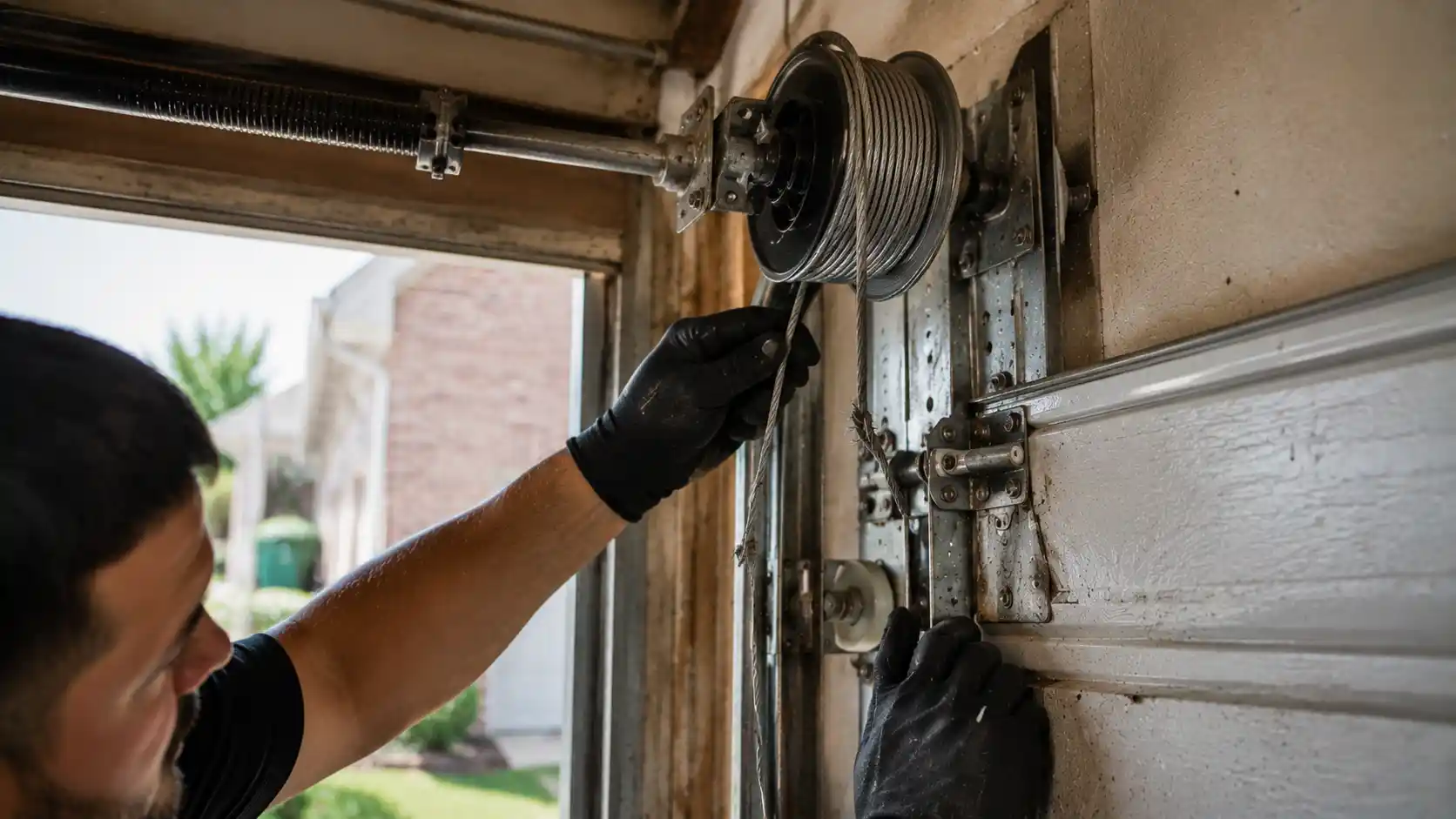
Can You Open a Garage Door With a Broken Spring?
Usually, you should avoid operating it. Without normal spring assistance, the garage door can become extremely heavy and difficult to control.
Continuing to use the opener may also place additional strain on the opener and other garage door components.
Supreme's current broken-spring safety guidance recommends leaving the door closed and avoiding opener use when a spring has failed.
If your vehicle is trapped inside, professional service is safer than trying to force the door upward.
Supreme's guide to opening a garage door with a broken spring explains the safety concerns in more detail.
Should One Spring or Both Springs Be Replaced?
It depends on the garage door system and the condition of the remaining spring.
Many double-spring systems have springs that were installed at the same time and have completed a similar number of operating cycles. If one spring has failed, the other may have experienced similar wear.
That does not mean every two-spring system automatically requires both springs to be replaced.
A technician should inspect the remaining spring, door balance, spring age and condition, and overall system before recommending the appropriate repair.
Supreme notes that replacement may include both springs when their age and wear are similar.
The recommendation should be based on the actual spring system rather than a one-size-fits-all rule.
Why a Professional Checks Door Balance After Spring Repair
Spring replacement should not end as soon as the new spring is installed.
Door balance is one of the most important checks after the repair.
A properly balanced door should move in a controlled way without depending on the opener to compensate for incorrect spring force.
Testing balance can reveal problems with spring selection, tension, cables, drums, or other lifting-system components.
Supreme's professional spring process includes checking manual balance, cable alignment, spring tension, and opener load after service.
This final testing helps confirm that the repair addressed the entire lifting system rather than only the broken part.

Can a Garage Door Spring Be Repaired Instead of Replaced?
Sometimes an intact spring system may need adjustment, balancing, lubrication, or related hardware service rather than complete spring replacement.
A physically broken spring is different.
A spring with separated coils, serious corrosion, fatigue, or other structural damage will generally need replacement rather than a temporary repair.
Supreme distinguishes between spring service for intact systems and replacement for broken, damaged, corroded, worn, or incorrectly sized springs.
If you are unsure which situation applies, a professional inspection can determine whether the spring itself has failed or another part of the system is causing similar symptoms.
What Should You Do When a Garage Door Spring Breaks?
If you suspect a broken spring, stop operating the garage door and keep people away from an unstable or partially open door.
Do not attempt to:
- Wind or unwind the spring
- Remove the spring or spring hardware
- Adjust spring tension
- Release high-tension cables
- Force a heavy door open
- Work beneath an unsupported door
Safer next step: Arrange professional service and describe what happened when the spring failed.
If the door is stuck, severely uneven, or preventing access to your vehicle, the situation may justify faster service. Supreme's emergency garage door repair guide explains when garage door problems require more urgent attention.
What Professional Spring Service Includes
The spring is matched to the door's weight, configuration, and lifting system.
Proper tools and procedures are used to control spring tension during service.
Cables, drums, bearings, brackets, rollers, tracks, and opener operation are checked for related problems.
Door balance, cable alignment, spring tension, and opener load are checked after the repair.
Conclusion
If you need to fix a garage door spring, professional service is the safer approach because spring repair involves more than replacing a broken part. The correct spring must be selected, tension must be controlled, related lifting hardware should be inspected, and the door needs to be balanced and tested afterward.
If your garage door has suddenly become heavy, uneven, difficult to open, or has a visibly broken spring, stop operating it. A professional inspection can determine what failed and whether other components were affected before the system is returned to normal use.
Need Garage Door Spring Repair?
Get professional spring inspection and repair throughout Dallas-Fort Worth and North Texas.
Schedule Spring Service