 Skip to content


Garage door counter-balance systems rely on two primary spring types: torsion springs, which mount above the door and twist to lift weight, and extension springs, which stretch along the upper side tracks. Selecting the right spring system depends on door weight, headroom clearance, daily opening frequency, and exposure to Texas weather conditions. While automatic openers control motion, the springs supply the physical counter-force necessary to lift heavy garage doors smoothly.
In Texas homes, humidity shifts, coastal air exposure, and sudden seasonal temperature swings can influence spring performance and surface corrosion over time. Understanding mechanical differences between system types allows homeowners to make informed decisions when planning repairs or system upgrades.
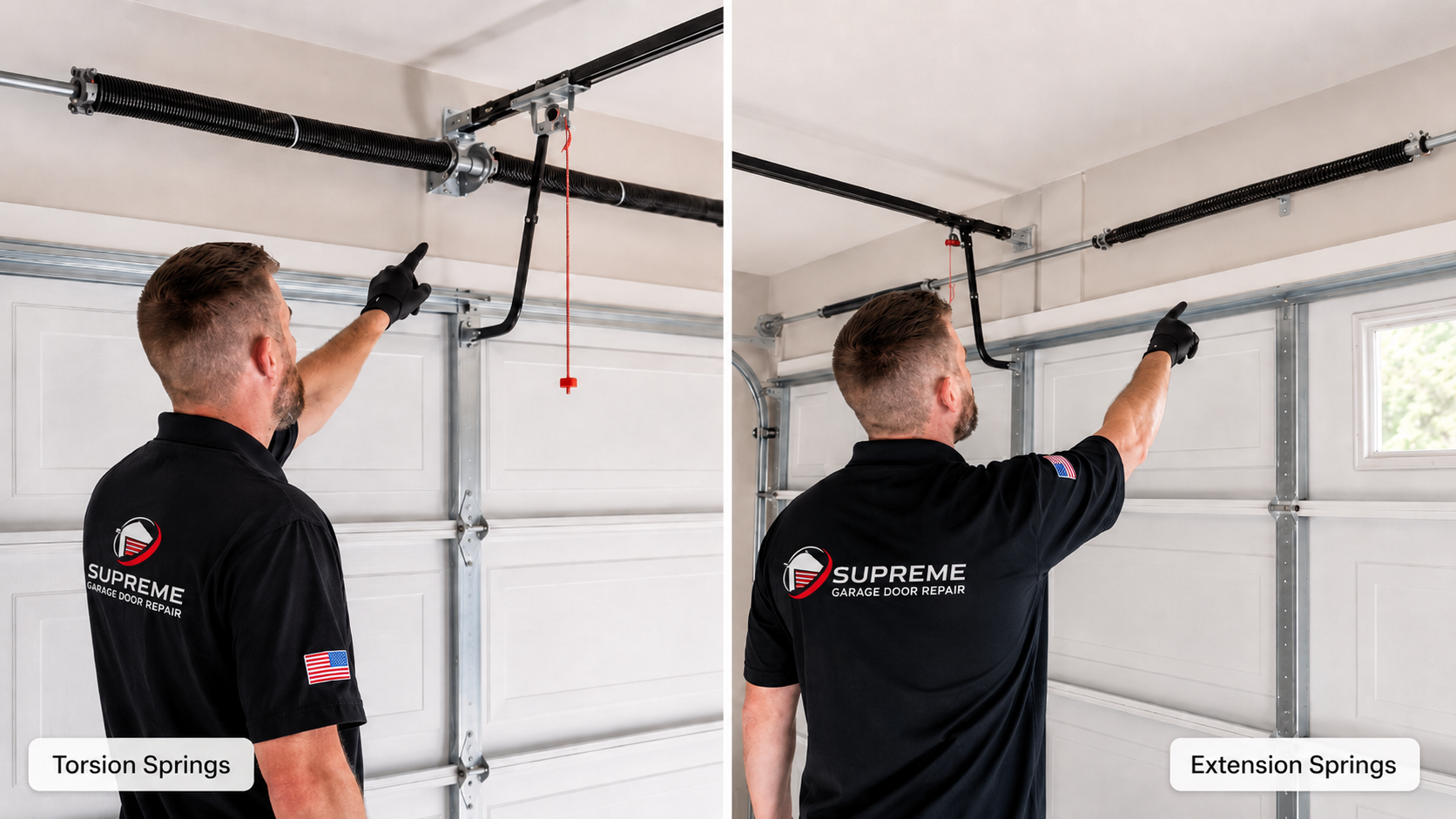
Both torsion and extension systems serve the same fundamental purpose—counterbalancing door weight so the door can be opened manually or electrically. However, they store and release kinetic energy through distinct mechanical actions, affecting overall durability, maintenance requirements, and safety features.
| Feature | Torsion Springs | Extension Springs |
|---|---|---|
| Mechanical Action | Twists under torque onto a central shaft | Expands and contracts horizontally along tracks |
| Mounting Location | Above the door opening (header) | Parallel to upper horizontal tracks |
| Lifespan Rating | Standard 10,000–20,000 cycles | Standard 5,000–10,000 cycles |
| Safety Features | Enclosed on shaft; usually stays contained if broken | Requires internal safety cables to restrain broken coil fragments |
| Headroom Requirement | Typically requires 12–15 inches of overhead space | Suitable for low-headroom garages (under 10 inches) |
According to Clopay’s spring specification guidance, spring life is measured in cycles (one full opening and closing sequence). For a garage opened 4 times per day, a 10,000-cycle spring offers an estimated functional rating of 6–7 years before metal fatigue occurs, though actual performance varies based on usage and environmental exposure.
Environmental conditions across Texas subject garage components to unique physical stress factors that can affect longevity:
Proper maintenance depends directly on the specific system installed. Refer to your manufacturer manual for approved lubricants and application frequency; general guidelines recommend periodic light lubrication using a non-tacky garage door spray rather than heavy grease, which can attract dirt.

Because garage door springs store substantial mechanical energy under high tension, spring replacement carries significant safety risks. While homeowners can perform basic visual inspections and light lubrication, mechanical adjustments or spring replacements should be assigned to trained technicians with specialized winding tools.
When scheduling professional service, evaluate potential service providers using the following criteria:
If your door exhibits signs of spring failure, learn more about professional garage door spring repair services to ensure safe, calibrated replacement.
In dual-spring systems, replacing both springs simultaneously is usually recommended if they were installed at the same time. Since both springs experienced the same number of operational cycles, the remaining spring is often near the end of its fatigue life.
Yes. Many homeowners convert from extension to torsion systems to improve operational smoothness and lifespan, provided there is adequate headroom clearance (typically 12 inches or more above the header).
Yes. If an electric opener attempts to lift a heavy door with a broken spring, the motor gear drive and drive belt or chain experience severe mechanical strain, which can lead to premature motor wear or gear failure.
Cold weather causes steel to contract slightly, increasing tension and making aged, fatigue-stressed wire more susceptible to brittle fracture during operation.
Most manufacturers recommend inspecting and lubricating springs once or twice per year using a silicone- or lithium-based spray formulated for garage doors. Always consult your product manual for specific maintenance schedules.
Common indicators include visible gaps in the coils, squeaking or grinding noises during operation, a door that feels heavy when lifted manually, or an opener that struggles or reverses shortly after starting.
Yes. Extension springs require internal safety cables threaded through the center of the coil. If an extension spring breaks under tension, the cable prevents the steel coil from striking vehicles or people nearby.
High-cycle springs are manufactured with heavier wire gauges or specialized heat-treatment processes to achieve higher fatigue ratings (e.g., 25,000 to 50,000+ cycles), extending service life in high-use environments.
If your garage door is operating unevenly, making unusual noises, or requires spring balance adjustments, consult with qualified technicians at Supreme Garage Door Repair to evaluate your system.
Request Spring Service