 Skip to content


Residential garage door repairs can involve anything from a noisy roller to a broken spring that leaves the door unable to open. Knowing which part of the system is causing trouble can help you decide whether the door needs maintenance, professional repair, or replacement.
A garage door works through several connected components. Springs help counterbalance the door's weight, cables assist with lifting, rollers travel through the tracks, and the opener controls powered movement.
A problem with one component can affect the rest of the system. For homeowners in Dallas-Fort Worth, recognizing early warning signs can help prevent a small issue from developing into a larger repair.
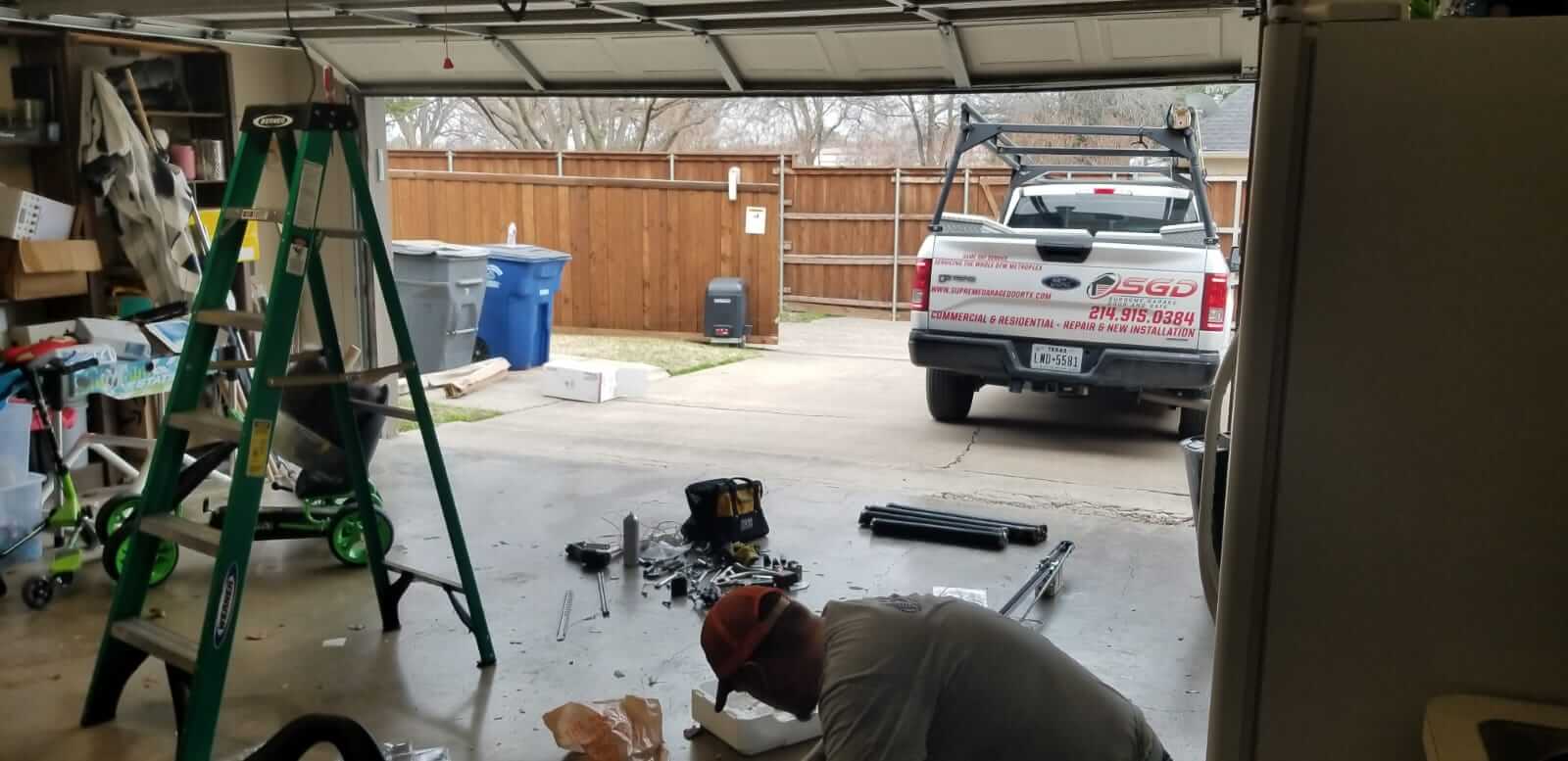
Quick Answer: Common residential garage door repairs involve springs, cables, rollers, tracks, openers, sensors, panels, and supporting hardware. Because several failures can create similar symptoms, identifying the cause before replacing parts is an important first step.
Some garage door problems appear suddenly, while others develop slowly through daily use.
Common repair needs include:
Worn or broken springs can make the door unusually heavy, uneven, or difficult to open.
Frayed, loose, or damaged cables can affect door balance and cause uneven movement.
Worn rollers or damaged tracks may cause noise, vibration, binding, or rough door movement.
Opener components, controls, power issues, or safety sensors can prevent normal opening and closing.
Because several problems can produce similar symptoms, the visible issue does not always identify the failed component.
For example, a door that opens only a few inches could have an opener issue, but a broken spring can produce a similar symptom.
A full inspection helps identify the cause before parts are replaced. Supreme Garage Door Repair's garage door repair service covers common residential problems involving springs, cables, tracks, rollers, openers, and related components.
Garage door springs carry much of the load required to raise and lower the door. Depending on the system, a residential door may use torsion springs above the opening or extension springs alongside the tracks.
A broken spring may cause a loud bang. The door may suddenly feel unusually heavy, open only a short distance, or stop moving correctly.

Spring problems should not be treated as a routine DIY repair. Springs operate under significant tension, and adjusting or removing them requires proper equipment and knowledge of the door system.
If you notice a visible break in a spring or the door suddenly becomes difficult to lift, avoid repeatedly operating it.
Supreme provides dedicated garage door spring repair for residential systems in its service areas.
Lift cables work with the spring system to support controlled door movement. They can become frayed, corroded, loose, or damaged over time.
A cable problem may cause one side of the door to sit lower than the other. The door may also look crooked, bind during movement, or stop before reaching the floor.
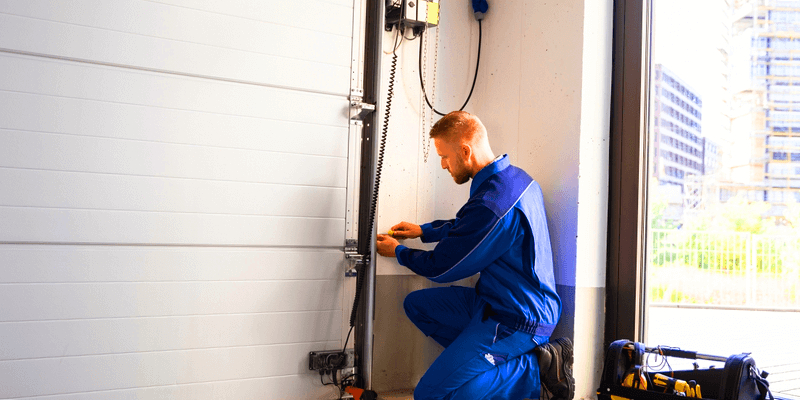
Do not attempt to release a damaged cable or remove the bottom bracket where a cable is attached. These components can be connected to the spring system and may remain under substantial tension.
If the door is hanging unevenly, stop operating it until the system is inspected.
Homeowners dealing with these symptoms can learn more about Supreme's garage door cable services .
A garage door may become louder because of worn rollers, loose hardware, insufficient lubrication, track issues, or stress elsewhere in the system.
The type of sound can provide useful context, but sound alone cannot confirm the cause.
These sounds may suggest that moving components are rubbing or traveling incorrectly.
Squeaking can develop around rollers, hinges, or other moving garage door components.
Popping sounds can sometimes occur when the garage door is moving unevenly or components are under unusual stress.
Sudden noise combined with shaking or crooked movement deserves more attention than an occasional minor sound.
An occasional minor sound is different from a door that has suddenly become much louder or begins shaking during operation.
Supreme's guide to a garage door making loud noise explains several common causes homeowners may notice.
If the noise is accompanied by crooked movement, visible damage, or difficulty opening the door, arrange an inspection rather than continuing to operate the system.
A garage door can become crooked when the lifting system is no longer supporting both sides correctly.
Possible causes include damaged cables, spring problems, rollers leaving their normal path, or other balance and track issues.
A door that is visibly uneven should be treated differently from a minor cosmetic problem. Continuing to run an uneven door can place additional strain on other components.
Important: Do not attempt to force the door straight or reposition an off-track door while the system is under load.
Supreme's guide to a crooked or uneven garage door provides more detail about spring, cable, and track warning signs.
If the door is hanging at an angle or has left the track, stop using it until it can be inspected.
Not every door that refuses to open or close has a mechanical door problem.
The opener, safety sensors, controls, power supply, or related electronics can also affect operation. If the door moves manually under safe conditions but does not respond correctly to the opener, the powered system may need attention.
Sensor problems commonly affect closing behavior. A door may begin to close and then reverse, or it may refuse to close through the opener.
Homeowners can safely check whether something is blocking the sensor area and look for obvious dirt or obstruction. Safety systems should never be bypassed to force the door to operate.
For recurring opener problems, a professional can determine whether a component can be repaired or whether the existing opener has reached the point where replacement makes more sense.
Yes. Many residential garage door problems can be repaired without replacing the entire door.
A broken spring, worn roller, damaged cable, sensor issue, or opener problem may affect one part of an otherwise serviceable system.
A specific spring, cable, roller, sensor, opener component, or other repairable part has failed while the main door remains serviceable.
The door has extensive damage, repeated structural problems, or other conditions that make continued repairs less practical.
Replacement becomes more relevant when the door itself has extensive damage, repeated structural problems, or other conditions that make continued repairs less practical.
The decision should be based on the condition of the complete system rather than one symptom.
If you are unsure which option applies, start with an inspection. A technician can identify the failed component and explain whether targeted repair or broader replacement makes sense.
Stop operating the door when continued movement could worsen the problem or create an unsafe condition.
This includes a garage door that is visibly off track, hanging unevenly, supported by a damaged cable, or affected by a broken spring.
You should also avoid standing or working beneath a door that cannot support itself normally.
Do not repeatedly press the opener button when the garage door is struggling to move.
The opener is designed to move a properly functioning door, not compensate for a major mechanical failure.
If the door appears unsafe, leave it in a stable position when possible and arrange professional service.
For a door that is still functioning but showing early signs of wear, scheduling an inspection before a complete failure can make diagnosis easier.
Garage doors experience repeated movement every time someone enters or leaves the garage. Rollers, hinges, cables, springs, tracks, and opener components can gradually show wear.
Homeowners can visually watch for unusual movement, new noises, damaged weather seals, loose visible hardware, or obvious obstruction around the tracks.
Some maintenance tasks are appropriate for homeowners, but adjustments involving springs, cables, door balance, or electrical components should be left to trained service professionals.
Supreme's garage door maintenance and tune-up service provides an option for checking system condition before a noticeable failure develops.
A maintenance visit can also help separate normal wear from components that need repair.
The right repair starts with identifying why the door is behaving differently.
Replacing a part without diagnosing the complete system can leave the original cause unresolved. A damaged cable, for example, may appear to be the main problem even when another component has contributed to the uneven movement.
Homeowners should pay attention to how the problem started, what the door sounds like, and whether movement has become slower or uneven. Those details can help during an inspection.
For Dallas-Fort Worth homeowners, the goal should be to restore normal door operation while addressing the component that caused the failure.
If your garage door is noisy, crooked, stuck, difficult to operate, or showing visible component damage, contact Supreme Garage Door Repair to request an inspection and discuss the appropriate residential repair.
Common repairs involve broken or worn springs, damaged cables, worn rollers, bent tracks, opener problems, misaligned sensors, damaged panels, and loose or worn hardware.
A broken spring may cause a loud bang, make the door unusually heavy, prevent it from opening more than a short distance, or leave a visible separation in the spring.
Possible causes include damaged lifting cables, spring problems, rollers leaving their normal path, or other balance and track issues. Stop operating a visibly uneven or off-track door until it can be inspected.
Grinding, squeaking, scraping, or popping may involve worn rollers, loose hardware, hinges, track problems, insufficient lubrication, or stress elsewhere in the garage door system.
Yes. A broken spring, damaged cable, worn roller, sensor issue, or opener problem may often be repaired without replacing an otherwise serviceable garage door. Replacement becomes more relevant when the door itself has extensive or repeated damage.
Stop using the door if it is off track, hanging unevenly, supported by a damaged cable, affected by a broken spring, unable to support itself normally, or otherwise appears unstable.
Maintenance can help identify developing wear, unusual movement, noise, loose hardware, roller or track issues, and other changes before they develop into a more noticeable failure.
Supreme Garage Door Repair provides residential garage door repair, spring and cable service, opener repair, maintenance, and related garage door services throughout Dallas-Fort Worth and North Texas.
Schedule Garage Door Service